
The 2026 Nobel Prize in Physics has been awarded to Belgian-American physicist Francis Halzen, the Royal Swedish Academy of Sciences announced on Tuesday, honoring his “decisive contributions to the IceCube Neutrino Observatory and the discovery of high-energy neutrinos of astrophysical origin.” The announcement, made in Stockholm, is the second of this year’s Nobel week, following Monday’s prize in physiology or medicine.
Halzen, 82, is the Hilldale and Gregory Breit Distinguished Professor at the University of Wisconsin–Madison and the principal investigator of the IceCube Neutrino Observatory — a cubic kilometre of instrumented ice at the South Pole that has opened an entirely new way of looking at the universe.
A detector the size of a small mountain, frozen into ice
The story of IceCube began in 1988, when Halzen first proposed turning Antarctica’s clear, ancient ice into a telescope. The idea sounded almost absurd: bury thousands of light sensors nearly two kilometres beneath the surface and wait for a nearly invisible particle to flash.
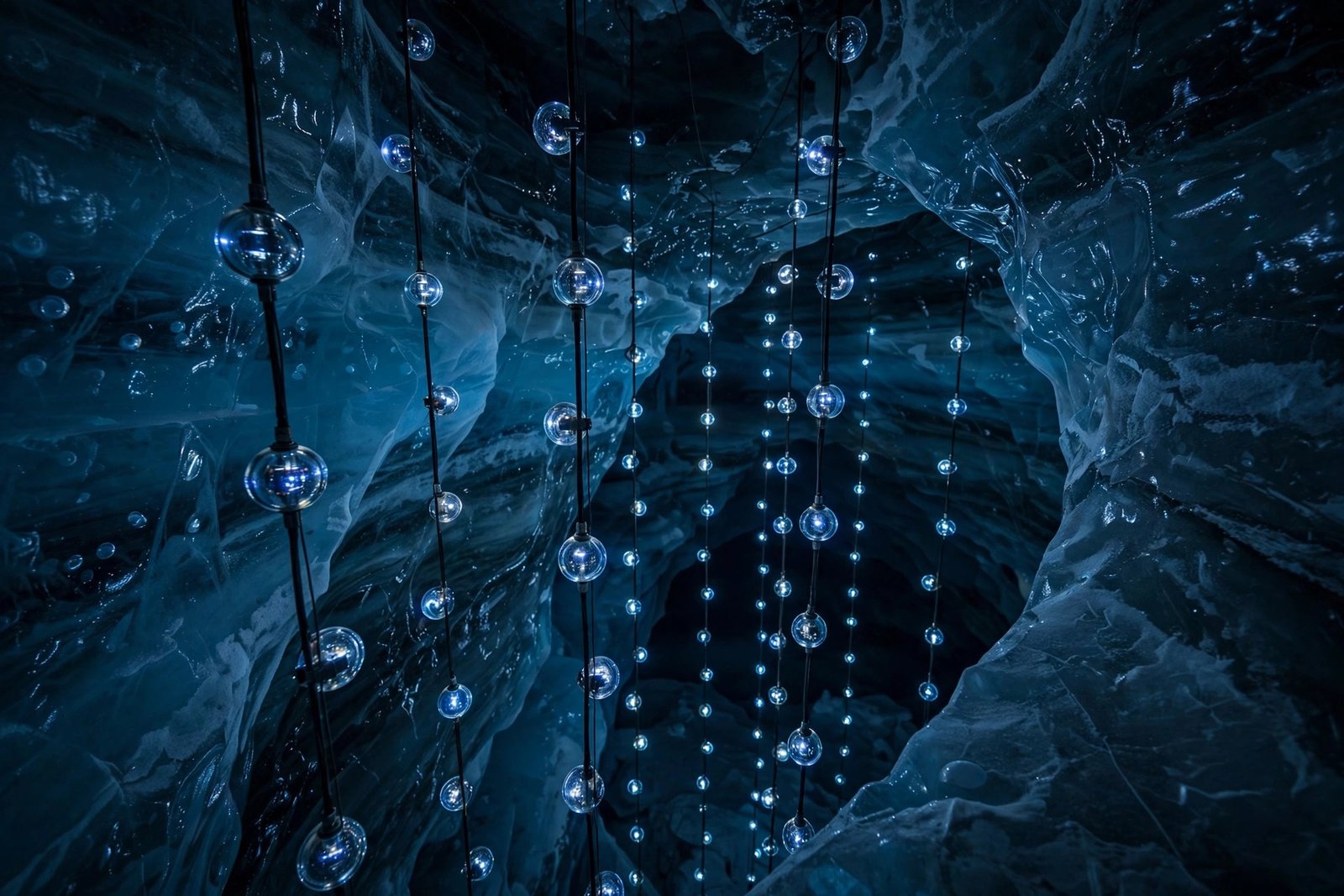
It worked. Today, IceCube’s 5,160 optical sensors — strung along 86 cables drilled into the ice with hot water — watch for the faint blue glow produced when a high-energy neutrino collides with an atomic nucleus, a phenomenon known as Cherenkov radiation. From the pattern and timing of the light, researchers can reconstruct the neutrino’s energy and trace it back to the corner of the cosmos it came from.
Neutrinos are among the strangest particles in nature. They carry almost no mass and no electric charge, and they interact with matter so rarely that they can fly through the entire planet without noticing it. Trillions of low-energy neutrinos from the Sun pass through your body every second, completely undetected.
The neutrinos IceCube hunts are different: they arrive from deep space carrying millions to billions of times more energy than anything produced in laboratories on Earth. They are born in the universe’s most violent settings — exploding stars, feeding black holes, and colliding galaxies — and they travel in straight lines for billions of years, unbent and undiminished. Catching them means reading messages from places no telescope could ever see directly.
“A great surprise”
Speaking to the Nobel committee by phone from Italy after the announcement, Halzen said the award was “a great surprise” and that he obviously had not expected it.
“Francis Halzen has led an international team of researchers and engineers who have provided us with a fantastic instrument,” said Mark Pearce, chair of the Nobel Committee for Physics. “His tenacity and scientific vision has paved the way for a new kind of astronomy.”
At the award presentation, committee member Eva Olsson described neutrinos as cosmic messengers: “The messengers bring information from the cosmos. They open the door to distant galaxies and tell us about the processes of exploding stars.”
The discovery did not come quickly. After the observatory’s sensors were in place and taking data, it was in 2013 that IceCube’s team announced the first evidence of high-energy neutrinos from beyond our solar system — 28 events that could not be explained by anything in our cosmic neighborhood. In 2018, the collaboration went further, tracing a single high-energy neutrino back to a flaring blazar, a supermassive black hole more than three billion light-years away. For the first time, humanity had pointed to a specific object in the distant universe using a neutrino.
Why ghost particles matter
For most of history, astronomy meant light. Telescopes collected visible light, then radio waves, X-rays, and gamma rays — every one of them a form of electromagnetic radiation. But light can be blocked, bent, or absorbed on its billion-year journey.
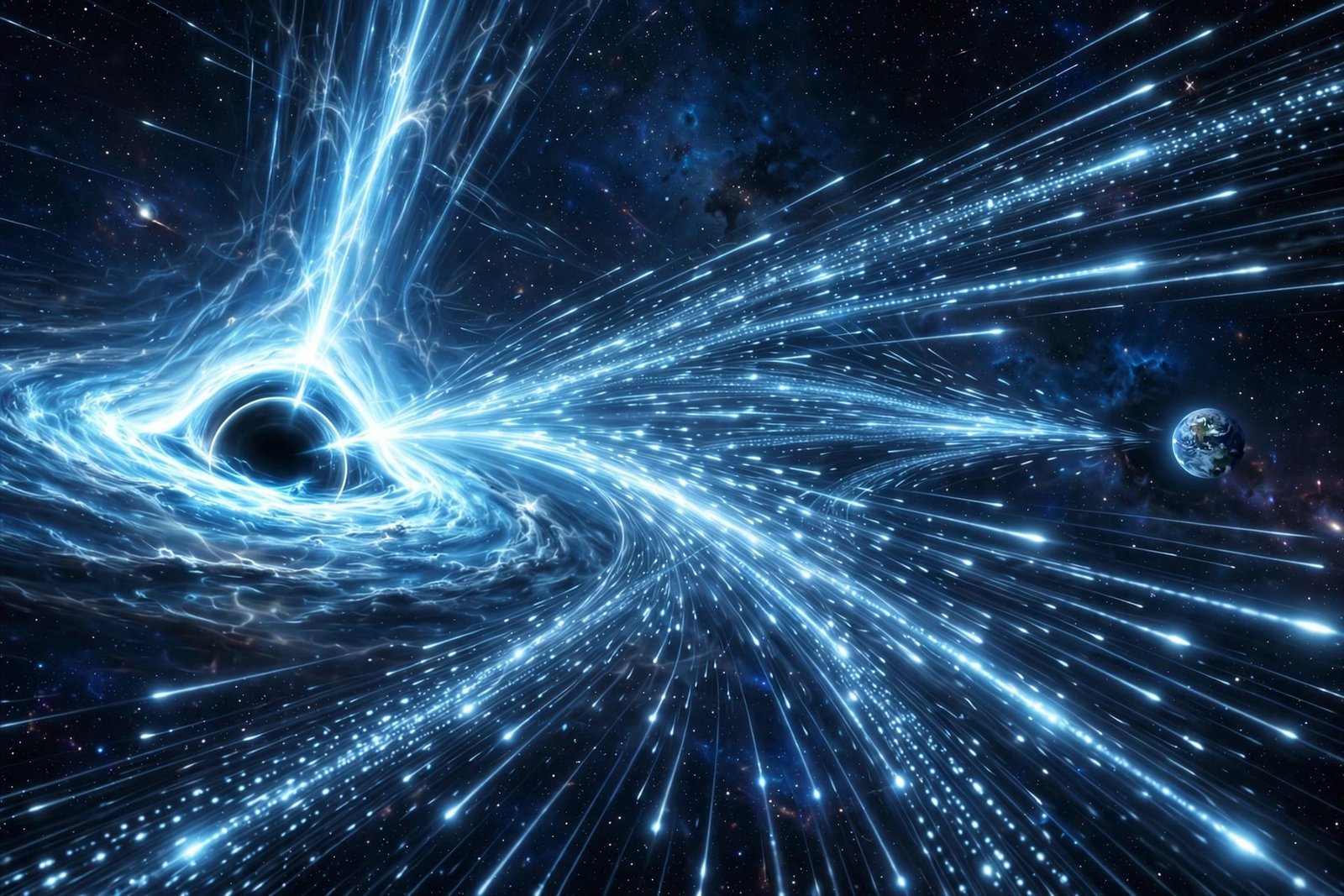
Neutrinos play by different rules. Because they barely interact with anything, they escape from the dense hearts of cosmic accelerators and fly straight to Earth, carrying information no photon ever could. Alongside gravitational waves, they form the second great “new messenger” of modern astronomy — a way of studying the universe’s most extreme environments from the inside.
Halzen’s long pursuit of this idea earned him a reputation well before Stockholm called. In 2014, Smithsonian magazine dubbed him “Neutrino Man” while honoring him with an American Ingenuity Award, describing the Antarctic experiment as the beginning of a new era in astronomy. The IceCube collaboration itself now spans more than 450 researchers and engineers from 58 institutions across 14 countries.
Nobel week 2026 so far
The physics prize is the second Nobel announced this year. Monday’s medicine prize honored three scientists for optogenetics, the technique that uses light to control brain cells — covered in our earlier report on the medicine laureates. The chemistry prize follows on Wednesday, with literature, peace, and economic sciences to come later in the week. This is quite a week for big-science breakthroughs: just days ago, astronomers reported the first radio signal picked up from the exoplanet Beta Pictoris b, another reminder that our view of the universe keeps widening.
Our earlier look at this year’s physics contenders showed how wide open the field was — today’s announcement settles it.
Halzen will receive his medal from King Carl XVI Gustaf at the traditional ceremony in Stockholm on December 10, along with prize money of 12 million Swedish kronor — roughly $1.2 million.
It is worth noting how far ahead of his time the winning idea was. When Halzen first sketched the Antarctic neutrino telescope in 1988, few believed a cubic kilometre of ice could ever function as a scientific instrument. He told reporters the project was “kind of an adventure where success wasn’t guaranteed.” Nearly four decades later, that adventure has rewritten what astronomy can see — and earned its architect the highest honor in physics.