
Nobel Prize 2026 Physics: Top Contenders and Everything We Know Before Tuesday’s Announcement
Science’s biggest week reaches its climax tomorrow. The Nobel Prize 2026 Physics winners will be named by the Royal Swedish Academy of Sciences on Tuesday, October 6 — and unlike most awards, nobody outside a tiny circle in Stockholm knows who is about to receive the famous phone call. The nominations are sealed, the shortlist is secret, and the speculation is running at full speed.
Here is everything we actually know: the exact announcement time, how the prize is really decided, the names physicists keep repeating, and what the last decade of prizes suggests about this year’s winner.
When Is the Nobel Prize 2026 Physics Announced?
The announcement is set for Tuesday, October 6, 2026, at 11:45 AM Central European Summer Time at the earliest — 2:45 PM Pakistan time. The Royal Swedish Academy of Sciences will reveal the laureates in Stockholm, and the announcement will be streamed live on nobelprize.org.
Physics is the second prize of Nobel week. The 2026 Nobel Prize in Physiology or Medicine was awarded on Monday, October 5, to Karl Deisseroth, Peter Hegemann, and Georg Nagel — the trio behind optogenetics, the “brain light switch” discovery (read our full report on the Medicine prize here). Chemistry follows on Wednesday, October 7, then Literature on October 8, Peace on October 9, and the Economics prize on October 12.

How the Physics Nobel Is Actually Decided
Forget red carpets — the Physics Nobel runs on a year-long, almost monastic process. Each September, the Nobel Committee for Physics invites thousands of scientists around the world to submit nominations. The deadline is January 31. The committee itself has five voting members plus adjunct members, and from March to May it consults outside experts on its preliminary candidates. A report is written over the summer, and in early October the full Academy votes by majority.
Three hard rules shape every forecast:
- At most three people can share the prize.
- It cannot go to anyone who died before the announcement.
- Nominations, nominators, and committee reports stay sealed for 50 years — this year’s files will not open until 2076.
That secrecy is exactly why predictions are an outside sport. Nobody — not the media, not the betting markets, not even most physicists — has seen the shortlist. Every forecast works from citation data, prize patterns, and educated guesswork.
One more number worth knowing: reports say this year’s full prize is worth 12 million Swedish kronor, up from 11 million, as the Nobel Foundation marks its 125th anniversary.
The Leading Contenders for the 2026 Physics Nobel
With the secrecy caveat firmly in place, here are the names and fields the physics world keeps coming back to.
Nicola Spaldin — the multiferroics pioneer
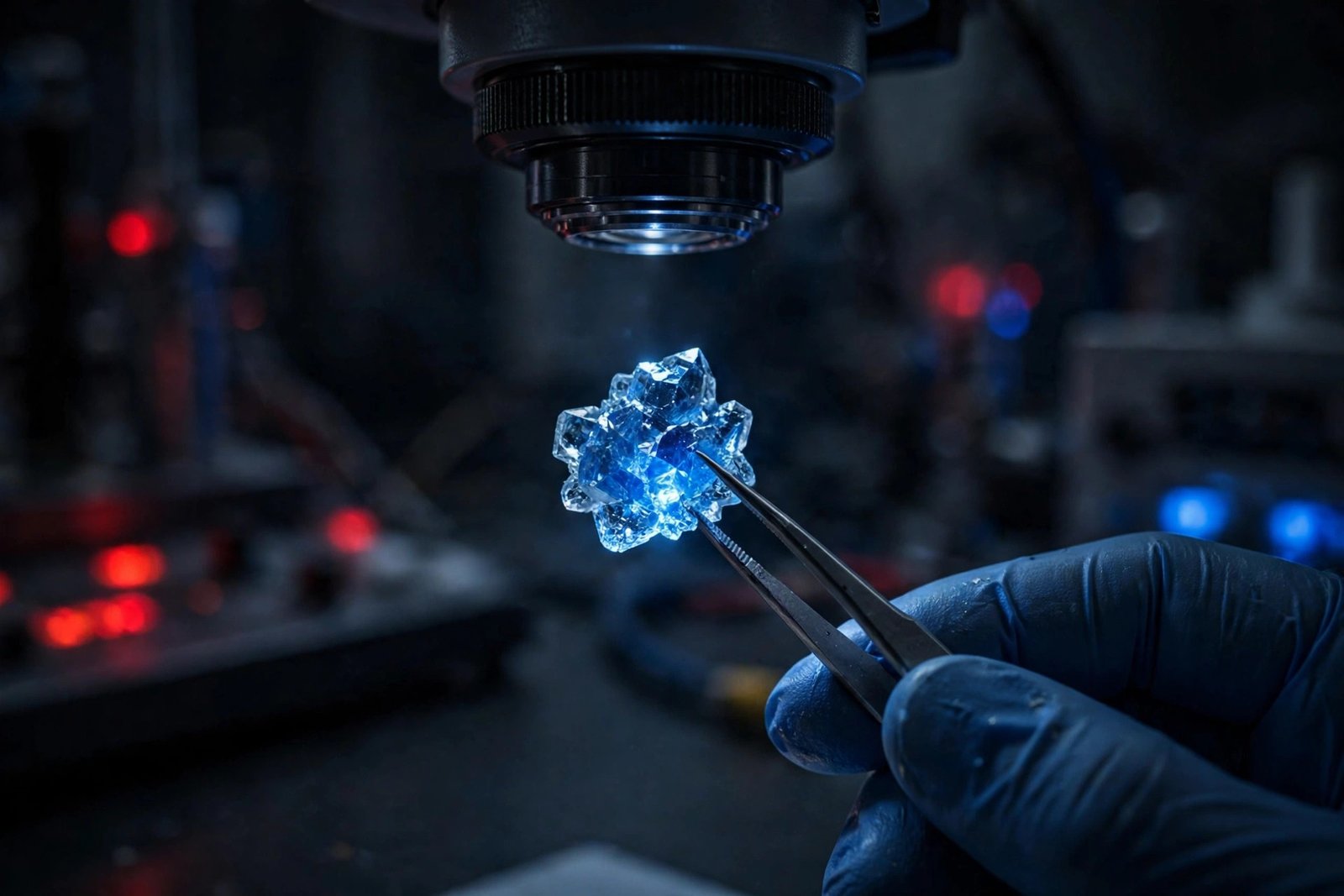
ETH Zurich professor Nicola Spaldin appears on Clarivate’s 2026 list of Citation Laureates — researchers its analysts consider of Nobel calibre — for her theoretical work on magnetoelectric multiferroics. These are materials that respond to both magnetic and electric fields, a combination that could transform data storage and magnetic sensing. Her research helped build the theoretical foundation for understanding this entire class of materials. Clarivate’s list has a striking track record: 89 of its Citation Laureates have gone on to receive a Nobel Prize.
John Pendry — the invisibility cloak physicist
Imperial College London’s John Pendry is tipped in predictions surveys for his foundational work on metamaterials and transformation optics — the science behind so-called invisibility cloaks. By engineering materials that bend light in ways nature never intended, Pendry’s work opened an entirely new field of optics with applications from superlenses to advanced antennas.
Quantum sensing and modern optics
Predictions also point to foundational research in modern optics and quantum sensing — the ultra-precise measurement techniques that use quantum effects to detect the almost undetectable. As quantum technology moves from labs to industry, the Academy may decide the moment has come to honor its foundations.
Could it be astrophysics instead? Space physics is undeniably having a moment — from new telescopes to the first radio signal ever detected from an exoplanet. But Nobel committees famously reward work decades in the making, and this year’s smart money is on condensed matter and optics.
What the Last Decade of Prizes Suggests
The physics prize tends to rotate between its great territories: condensed matter, quantum science, and astrophysics. Last year’s award recognized work on macroscopic quantum mechanical tunnelling and energy quantisation in an electric circuit — firmly in quantum territory.
If that pattern holds, 2026 could swing toward materials and condensed matter (which favors Spaldin) or optics and photonics (which favors Pendry). Of course, the Academy loves a surprise — and with nominations sealed for half a century, the only honest forecast is that nobody knows.
How to Watch the Announcement Live
The Royal Swedish Academy of Sciences will announce the laureates live from Stockholm on Tuesday, October 6, at 11:45 AM CEST (2:45 PM PKT), streamed on nobelprize.org. Expect the traditional scene: the committee chair, a brief explanation of the discovery, and then the laureates’ names read out to the world. Check back here after the announcement for the winners and what their discovery means.
Why This Year’s Prize Will Shape Your Future
Physics Nobels are not museum pieces — they are seed capital for the future. Multiferroics could deliver faster, lower-power computer memory. Metamaterials are already improving antennas and imaging systems. Quantum sensing promises sharper medical scans and navigation that works without GPS.
Tomorrow’s announcement in Stockholm is really a preview of the technology in your pocket ten years from now. The names will be unfamiliar; the impact will not be.