
Anne Carson Nobel Prize 2026: Who Is the New Laureate?
Anne Carson has won the 2026 Nobel Prize in Literature — and if her name doesn’t ring a bell, you’re far from alone. The Canadian poet, classicist, and translator took the literary world by surprise when the Swedish Academy named her this year’s laureate on Thursday, October 8, honoring what it called her “bold and inventive oeuvre.” The announcement itself was as unconventional as her writing: Carson was reached by phone in Iceland, where, as the Academy’s permanent secretary put it, she was “listening to the wind.”
So who exactly is Anne Carson? What did she write, and why did the Nobel committee choose her? Here’s the full story behind the 2026 Nobel Prize in Literature.
Who Is Anne Carson, the 2026 Nobel Prize in Literature Winner?
Anne Carson is a 76-year-old Canadian writer born in Toronto on June 21, 1950. She is equal parts poet, essayist, translator, and classical scholar — a combination almost unheard of at the highest level of world literature. Before becoming one of the most celebrated poets alive, Carson was first a Hellenist: she earned her bachelor’s, master’s, and doctorate in classics from the University of Toronto (in 1974, 1975, and 1981), studied Greek metrical structures at the University of St. Andrews in Scotland, and went on to teach at Princeton, the University of Michigan, Emory, UC Berkeley, and McGill.
That scholarly foundation became the engine of her art. As the Nobel committee’s chairman Anders Olsson explained, nearly all of Carson’s writing has centered on “the intersection between the philologist’s obsession with words and the poet’s desire for new meaning” — the meeting point of a dictionary-maker’s precision and a poet’s imagination.

Why Did Anne Carson Win the Nobel Prize?
The Swedish Academy honored Carson “for her bold and inventive oeuvre that, in playful dialogue with the classical tradition, has created new forms for contemporary literature.” In plain language: she takes ancient Greek myths, poems, and tragedies — some of them thousands of years old — and rebuilds them into startlingly modern works that refuse to sit in any single genre.
Her books blend verse, prose, dialogue, literary criticism, translation, and even visual art. One work might combine a Greek myth retelling with an academic essay and a hand-drawn illustration. Another arrives as a single long folded page you unroll like a scroll. The Academy specifically praised her ability to explore “the possibilities of writing,” noting that her translations from Classical Greek may be regarded as independent works of art in their own right.
Carson’s fellow laureates this week put her win in context: the 2026 Nobel science prizes honored breakthroughs from Kagan and Soai in chemistry to Francis Halzen’s ghost-particle hunt in physics and the brain “light-switch” discovery in medicine. Her literature prize completes a Nobel week celebrating ideas that rewired how we see the world.
Anne Carson’s Most Famous Books
If you’re new to Carson, these are the works that built her legend:

Autobiography of Red (1998) — the book that made her name. A “novel in verse” that reimagines Geryon, the red-winged monster slain by Heracles in Greek myth, as a tender, modern young man devoted to his mother who falls in love with the boorish Heracles. The Nobel committee singled it out as one of her most acclaimed works.
Eros the Bittersweet (1986) — her debut book of scholarship on desire, built around the ancient Greek poet Sappho’s word for love’s ache: bittersweet. Part essay, part philosophy, part literary history.
The Beauty of the Husband (2001) — a fictional essay about a marriage told in “29 tangos,” each opening with lines from the poet John Keats. It made Carson the first woman to win Britain’s prestigious T.S. Eliot Prize.
Nox (2010) — an elegy for her estranged brother Michael, printed on one long accordion-folded page filled with photographs, letters, drawings, and poetry, built around an ancient elegy by the Roman poet Catullus, who also mourned his brother. Olsson called it “a creation as sculptural as it is literary.”
Norma Jeane Baker of Troy (2019) — a performance piece that fuses Helen of Troy from Euripides’ play Helen with Marilyn Monroe, ancient myth and modern celebrity in one frame.
Wrong Norma (2024) — her most recent collection, 25 pieces of poetic prose with her own artwork. It was a finalist for the 2024 National Book Award and won the National Book Critics Circle Award for poetry.
Beyond books, Carson has written opera libretti, stage pieces, and the illustrated Antigonick (2012), a reworking of Sophocles’ Antigone — proof, as the Academy noted, of the freedom with which she moves across art forms.
Her Unforgettable Reaction to the Win
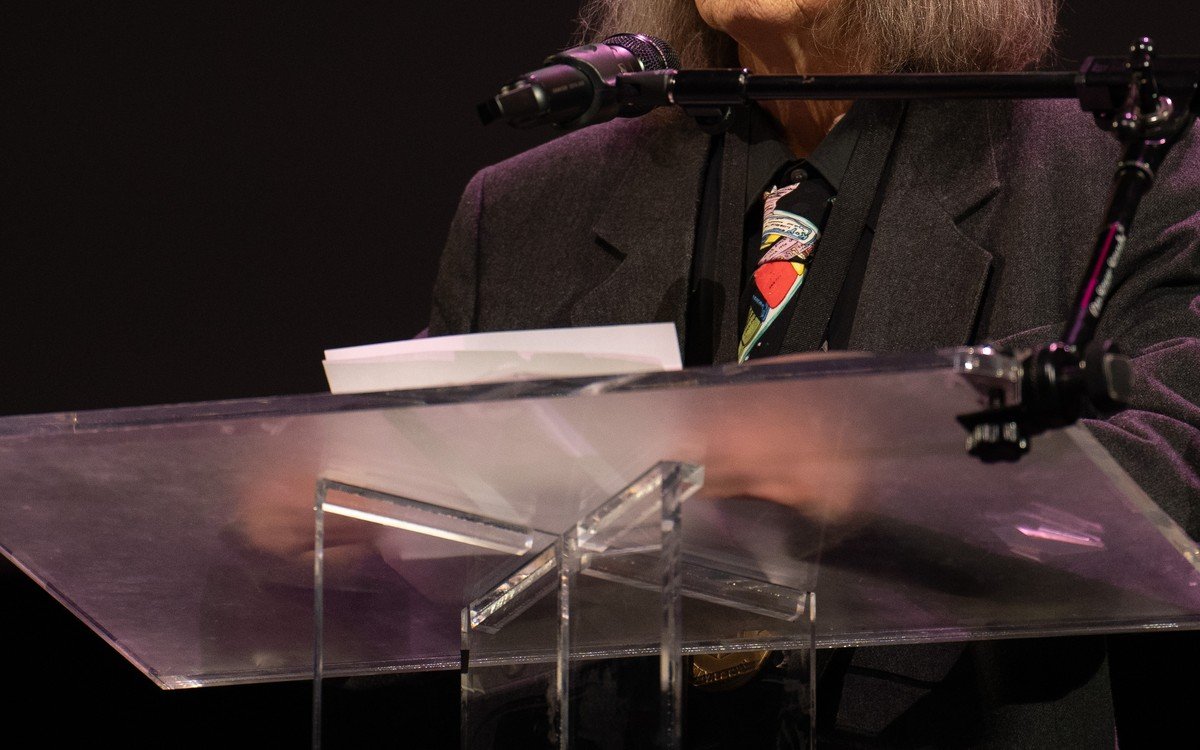
Nobel reactions are usually polished. Carson’s was anything but. Reached by the Academy while in Iceland — where she has kept a home for years — she was reportedly taken completely by surprise. “Crazy, I think they’re all crazy,” she told Icelandic broadcaster RUV when asked how she felt, adding with characteristic dry wit: “I’ll get a sticker on the front of my book.”
The prize carries 12 million Swedish kronor (about $1.2 million), and the medal will be presented in Stockholm on December 10 — the anniversary of Alfred Nobel’s death.
Why This Nobel Pick Matters
Carson is only the second Canadian to win the Nobel Prize in Literature, thirteen years after Alice Munro in 2013 — and notably, the bookmakers’ favorite had been another Canadian, Margaret Atwood. She succeeds Hungarian novelist László Krasznahorkai (2025) and South Korea’s Han Kang (2024), continuing a recent run of laureates celebrated for reinventing what literature can be.
The choice also lands at a moment when readers are hungry for exactly what Carson offers: old stories made new. From myth-retellings topping bestseller lists to Greek tragedy filling theaters, the ancient world is having a modern moment — and the 2026 Nobel laureate has been its most daring translator for four decades.
Anne Carson Nobel Prize: Your Questions Answered
Who is Anne Carson? A 76-year-old Canadian poet, essayist, translator, and classics scholar, born in Toronto in 1950, known for blending ancient Greek literature with modern poetry, essays, and visual art.
What did Anne Carson win the Nobel for? Her entire body of work — her “bold and inventive oeuvre” that creates new literary forms in dialogue with the classical tradition, including Autobiography of Red, The Beauty of the Husband, Nox, and Eros the Bittersweet.
How much is the 2026 Nobel Prize in Literature worth? 12 million Swedish kronor, roughly $1.2 million, presented in Stockholm on December 10.
Where should I start reading Anne Carson? Most readers begin with Autobiography of Red — her most famous and most accessible book. If you prefer essays, try Eros the Bittersweet; for something visually unforgettable, Nox.
Was Anne Carson expected to win? Not widely. The most-cited names this year included Margaret Atwood, and Carson — while hugely respected among poets — was far less known to general readers. The Swedish Academy has a long history of such surprise picks.
Love, grief, desire, identity: for forty years, Anne Carson has been turning 3,000-year-old myths into stories about the things we feel right now. The Nobel committee finally put a sticker on her book — and it says “Literature 2026.”