
Top 8 Modren Living Room Ideas for a Stylish and Comfortable Home
Introduction
The living room is often the most important shared space in a home. It is where family members relax, guests are welcomed, conversations happen, and everyday life unfolds. Because of that, a beautiful living room should not only look impressive but also feel comfortable and practical.
Modern living rooms have moved far beyond the idea of simply placing a sofa, coffee table, and television in one room. Today’s designs combine carefully planned layouts, layered lighting, textured walls, practical storage, comfortable furniture, and carefully selected decorative details.
Whether you have a spacious open-plan home or a compact apartment, the right design choices can completely transform the atmosphere. Even small living room decor can look sophisticated when furniture proportions, colors, lighting, and storage are handled correctly.
TV walls have also become an important architectural feature. Instead of simply mounting a television on a blank wall, homeowners are increasingly using wood panels, stone textures, floating cabinets, niches, lighting, and built-in storage to create a complete focal point.
In this guide, we’ll explore the top 10 Modren Living Room ideas for creating stylish, comfortable, and functional interiors. The ideas include contemporary minimalist spaces, cozy layered interiors, farmhouse-inspired rooms, warm apartment styling, statement walls, and several sophisticated television wall concepts.
The goal is not to copy one particular trend. Instead, these ideas will help you understand how to combine design elements so your living room feels personal, balanced, and timeless.
Table of Contents
- Warm Neutral Modern Living Room
- Luxury Marble TV Wall Living Room
- Cozy Textured Living Room
- Modern Farmhouse Living Room
- Small Living Room with Smart Storage
- Statement Wood Slat TV Wall
- Warm Apartment Aesthetic
- Contemporary Dark and Dramatic Living Room
- Modern Gallery Wall Living Room
- Open-Plan Luxury Modern Living Room
- How to Choose the Right Modern Living Room Style
- How to Design a Modern TV Wall
- Choosing the Right Living Room Wall Design
- Modern Living Room Furniture and Layout Tips
- Lighting Tips for a Modern Living Room
- Common Mistakes to Avoid
- Expert Tips
- Frequently Asked Questions
- Conclusion
1. Warm Neutral Modern Living Room
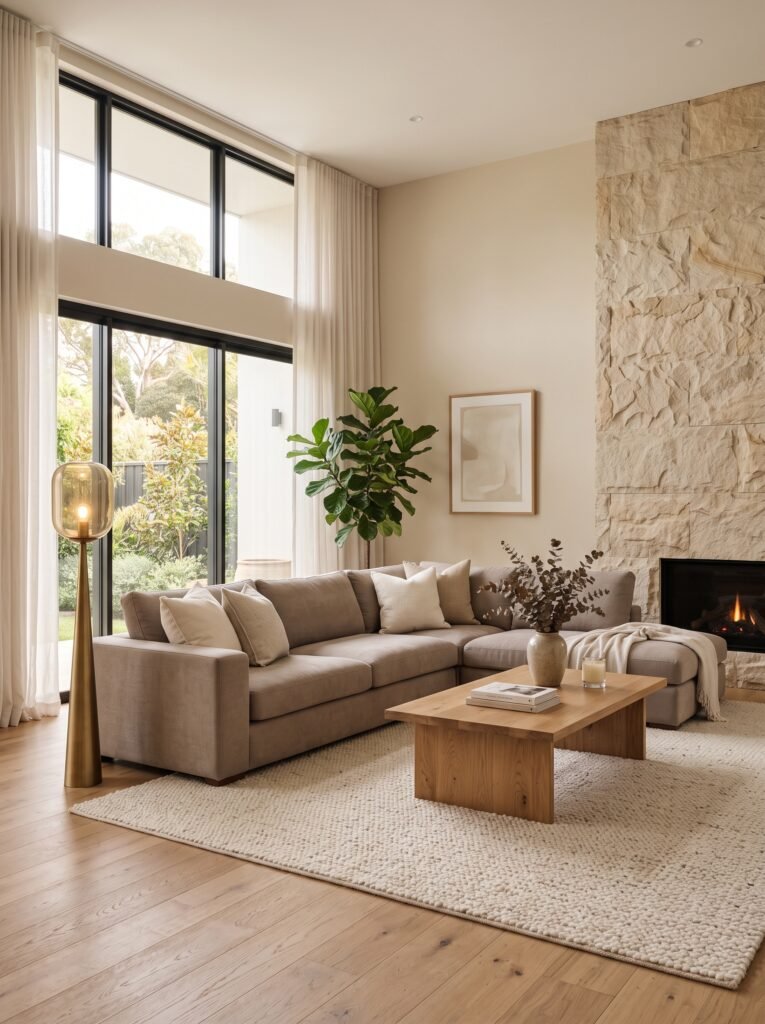
A warm neutral living room is one of the easiest ways to create a modern interior that feels comfortable rather than sterile.
Instead of relying on bright white surfaces and extremely minimal furniture, this approach uses warm beige, taupe, soft brown, muted gray, natural wood, and subtle cream tones.
The secret is layering. A neutral sofa can be combined with a textured rug, wooden coffee table, woven accessories, soft curtains, and warm lighting.
This creates a sophisticated room while maintaining the feeling of a cozy living room.
Key Elements
- Neutral upholstered sofa
- Natural wood coffee table
- Textured area rug
- Soft curtains
- Warm ambient lighting
- Minimal decorative objects
- Indoor plants
- Natural wood accents
Avoid using too many shades that are almost identical. Even a neutral room needs contrast.
For example, pair a light sofa with a darker wood table and medium-toned flooring. Add black or bronze accents through lighting and accessories.
2. Luxury Marble TV Wall Living Room
A television wall can become one of the strongest architectural features in a modern living room.
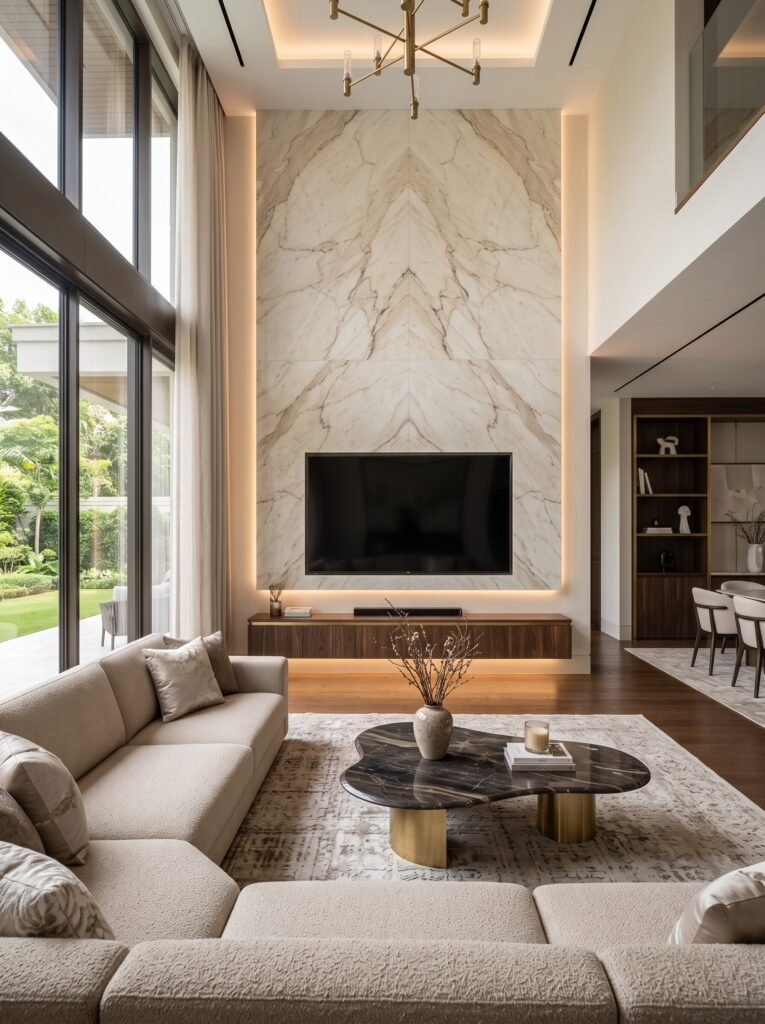
Instead of treating the television as an isolated electronic device, integrate it into the overall wall design. Large-format marble or stone-look panels can create a sophisticated backdrop, while a floating cabinet below provides storage without visually weighing down the room.
This is where a tv unit design modern living luxury approach works particularly well.
Use concealed wiring, minimal shelving, warm LED lighting, and carefully selected decorative objects to maintain a clean appearance.
Design Formula
Stone or marble wall + wall-mounted TV + floating cabinet + concealed lighting = sophisticated TV feature wall
A neutral stone pattern works especially well because it provides visual interest without competing with furniture.
Practical Tip
Before installing the television, determine the viewing distance, screen height, electrical outlets, cable routes, and ventilation requirements. Good design should also be practical.
3. Cozy Textured Living Room
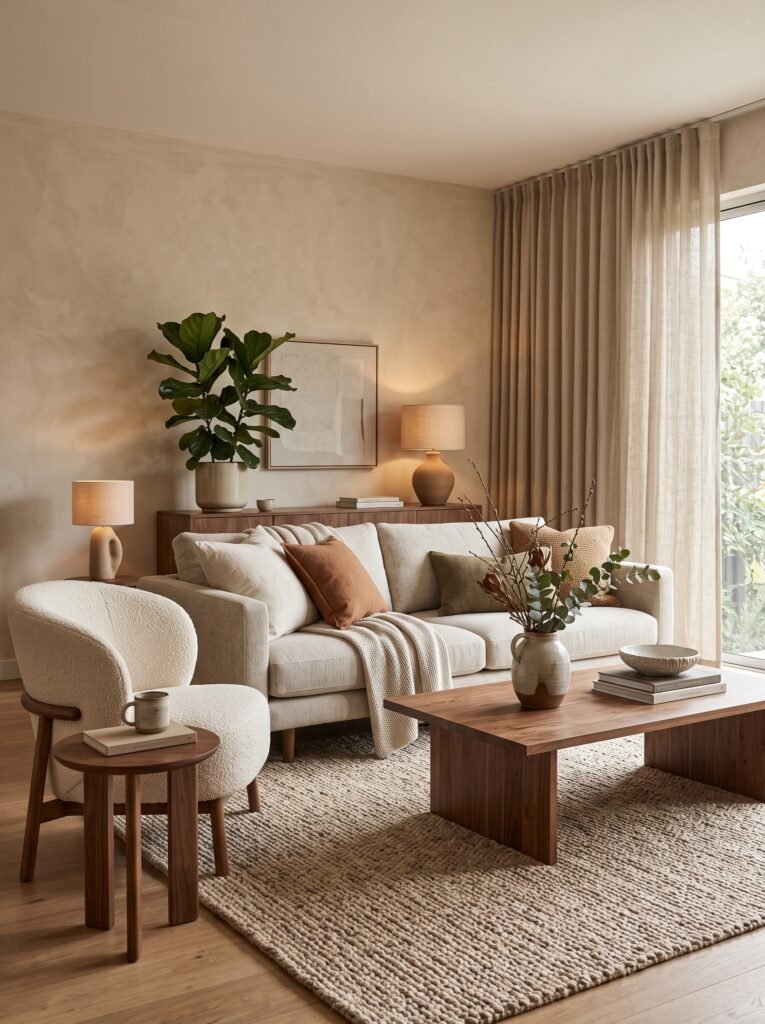
Modern design doesn’t have to mean hard surfaces and minimal decoration. A successful contemporary interior can feel exceptionally comfortable when different textures are layered carefully.
Think boucle or linen upholstery, woven rugs, soft cushions, timber, textured plaster, curtains, and warm lighting.
The result is a room that feels visually rich without appearing cluttered.
This approach is ideal for anyone who wants a modern home but prefers a softer and more welcoming atmosphere.
How to Add Texture
- Use a textured rug under the seating area.
- Mix smooth and rough surfaces.
- Add cushions in different fabrics.
- Introduce natural timber.
- Use soft curtains.
- Include warm lamps.
- Add one or two plants.
The key is moderation. Too many textures competing for attention can make the room feel chaotic.
4. Modern Farmhouse Living Room
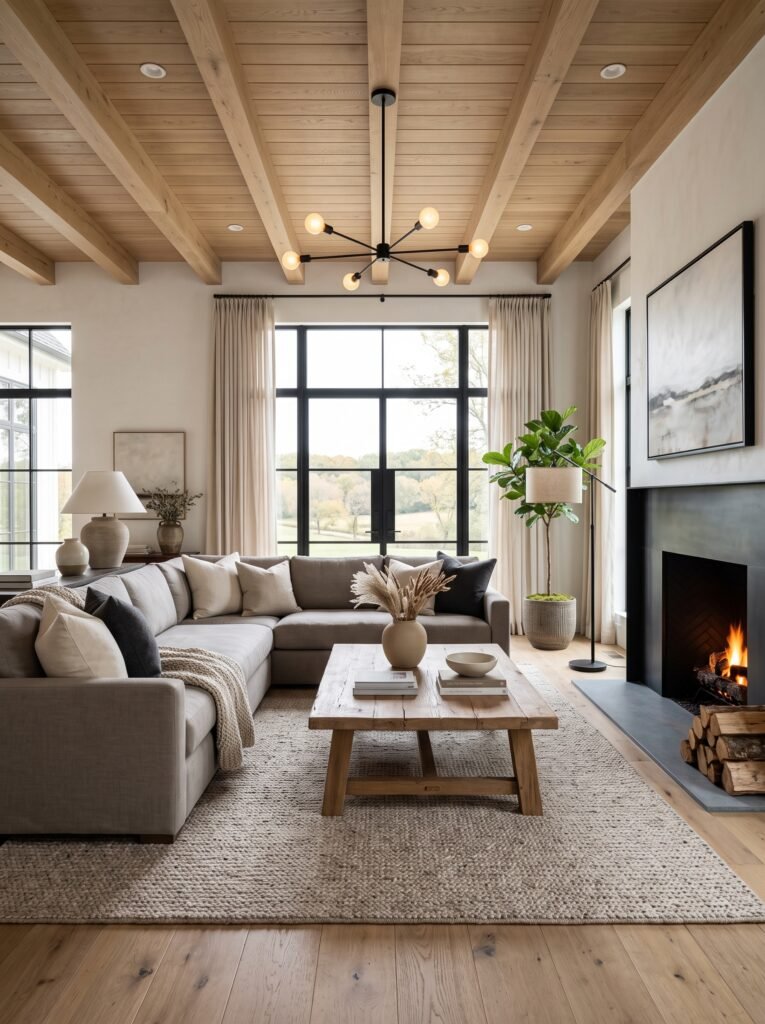
A farmhouse living room can be modern without losing the warmth associated with traditional farmhouse interiors.
The contemporary version often combines simple furniture with natural wood, exposed textures, soft neutral colors, black accents, and comfortable fabrics.
A large sectional sofa can anchor the room, while a reclaimed or natural wood coffee table introduces character.
Modern Farmhouse Features
- Natural timber
- Neutral upholstery
- Black metal accents
- Simple wall decor
- Comfortable seating
- Textured rugs
- Soft lighting
- Subtle rustic details
Avoid turning the room into a collection of farmhouse-themed decorations. Instead, use a few authentic-looking materials and let the architecture and furniture establish the style.
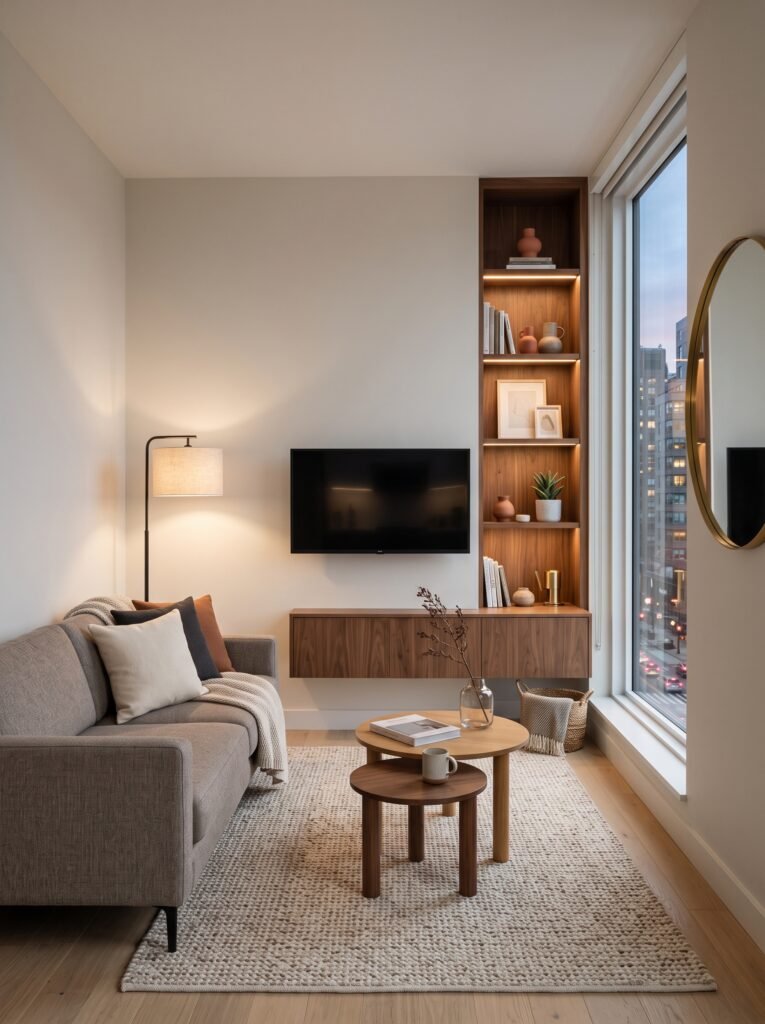
5. Small Living Room with Smart Storage
A smaller room doesn’t have to sacrifice style. In fact, limited space can encourage better design decisions.
The most important principle for small living room decor is to avoid filling every available surface with furniture.
Choose pieces that perform multiple functions. A wall-mounted television can free up floor space, while a floating cabinet can provide storage without appearing bulky.
A slim sofa, nesting coffee tables, wall-mounted shelves, and furniture with hidden storage can also help.
Small-Space Design Checklist
| Design Choice | Benefit |
|---|---|
| Floating TV cabinet | Frees visual floor space |
| Slim sofa | Improves circulation |
| Wall shelves | Uses vertical space |
| Light colors | Creates openness |
| Mirrors | Reflect light |
| Nested tables | Flexible surface area |
| Hidden storage | Reduces clutter |
Use the vertical surfaces intelligently. A well-designed wall can provide storage and decoration without consuming valuable floor area.
6. Statement Wood Slat TV Wall
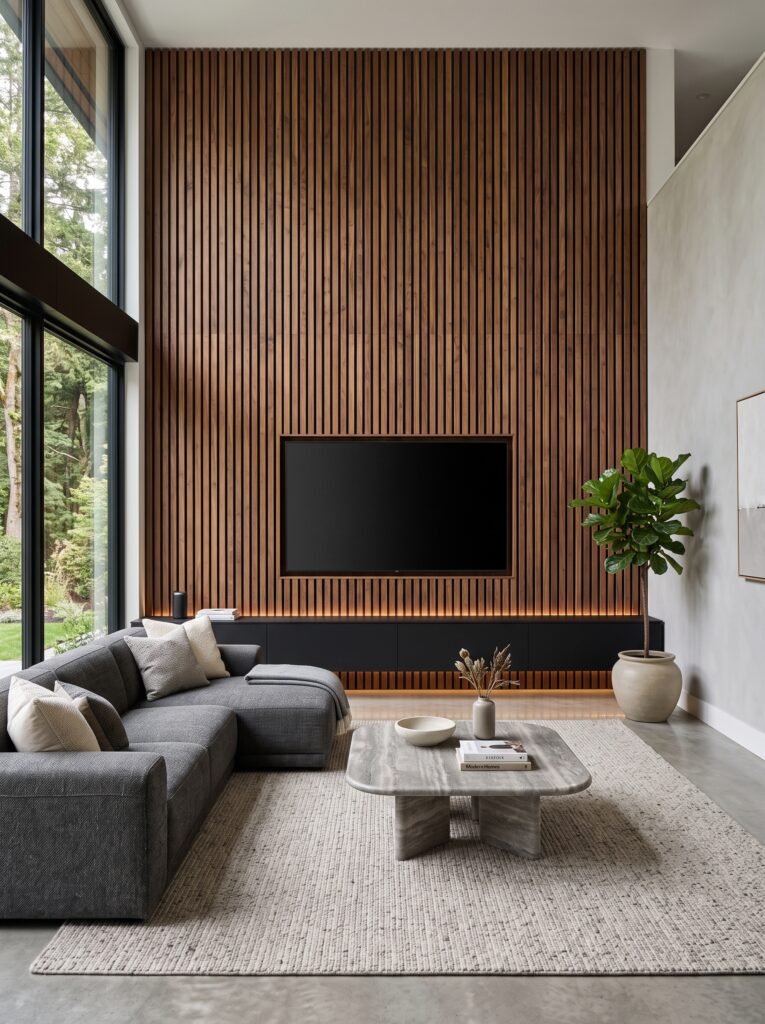
Wood slat walls have become a popular feature in contemporary interiors because they introduce warmth, texture, and vertical rhythm.
A wood slat tv wall design can make a television area feel more intentional while also creating a visual transition between different sections of an open-plan room.
Dark wood works well with neutral sofas, while lighter oak can brighten a smaller space.
A floating TV cabinet beneath the screen keeps the composition clean.
Design Tips
- Keep the slat spacing consistent.
- Hide cables inside the wall where possible.
- Use integrated lighting rather than excessive decorative lighting.
- Choose a cabinet that complements the wood.
- Avoid covering every wall with slats.
One feature wall is usually enough to establish the design.
7. Warm Apartment Aesthetic
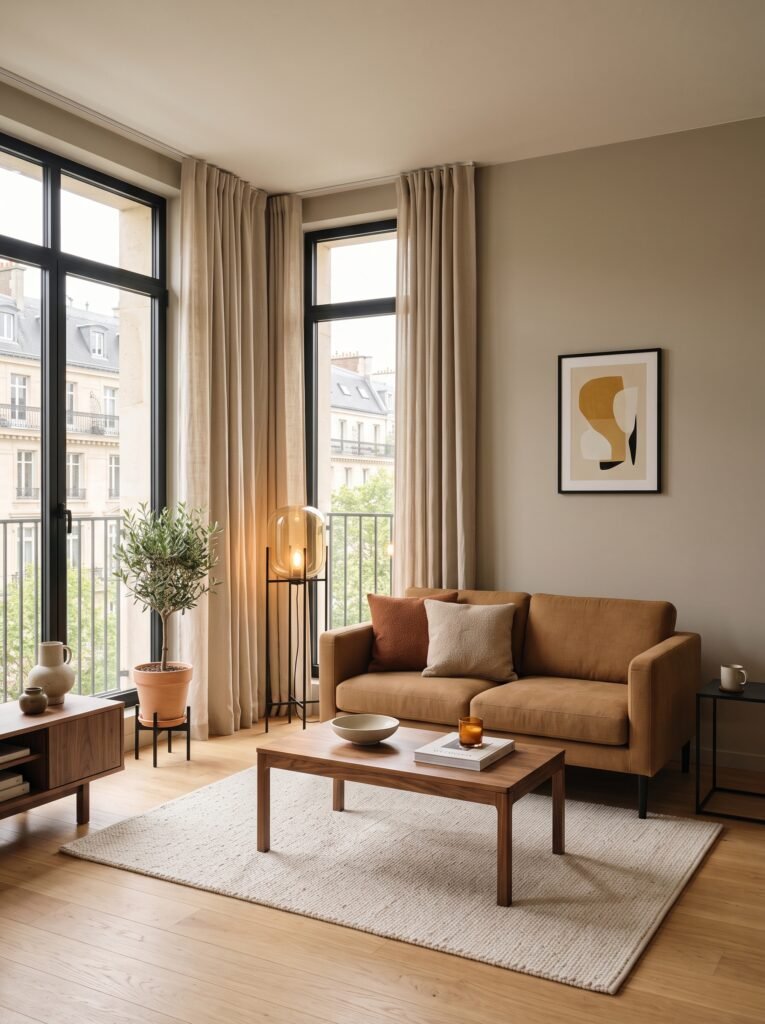
A warm apartment aesthetic focuses on creating a comfortable atmosphere without overwhelming the limited proportions often found in apartment living rooms.
Instead of using a large number of decorative pieces, concentrate on a few elements that have a strong visual impact.
Warm lighting, soft textiles, natural wood, muted colors, artwork, and plants can dramatically change the atmosphere.
Elements That Work Well
- Warm white or greige walls
- Natural wood furniture
- Soft floor lamps
- Linen curtains
- Textured rugs
- Small indoor trees
- Neutral artwork
- Warm accent lighting
Lighting is particularly important in apartments because the same room may need to function as a living area, entertainment space, workspace, and dining zone.
Create separate lighting layers for each purpose.
8. Contemporary Dark and Dramatic Living Room
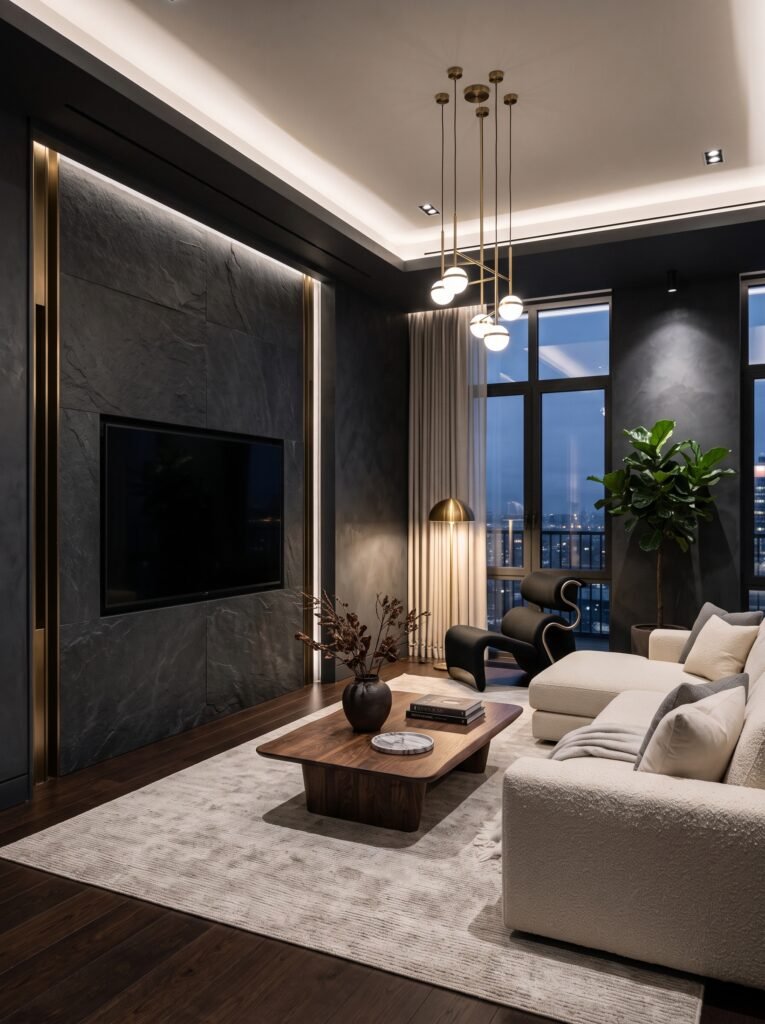
Dark living rooms can create a sophisticated and intimate atmosphere when balanced with lighter furniture and carefully planned lighting.
Instead of painting every surface black, use deep charcoal, espresso, or dark olive on one or two architectural elements.
A dark TV wall can become a dramatic focal point, while lighter upholstery and warm wood prevent the room from feeling too heavy.
This style is particularly effective in larger rooms with generous windows.
Balance Dark Colors With
- Warm wood
- Cream upholstery
- Metallic accents
- Large windows
- Soft lighting
- Light-colored rugs
- Indoor greenery
A dark room needs multiple layers of lighting. Relying only on ceiling lights can make the space feel flat.
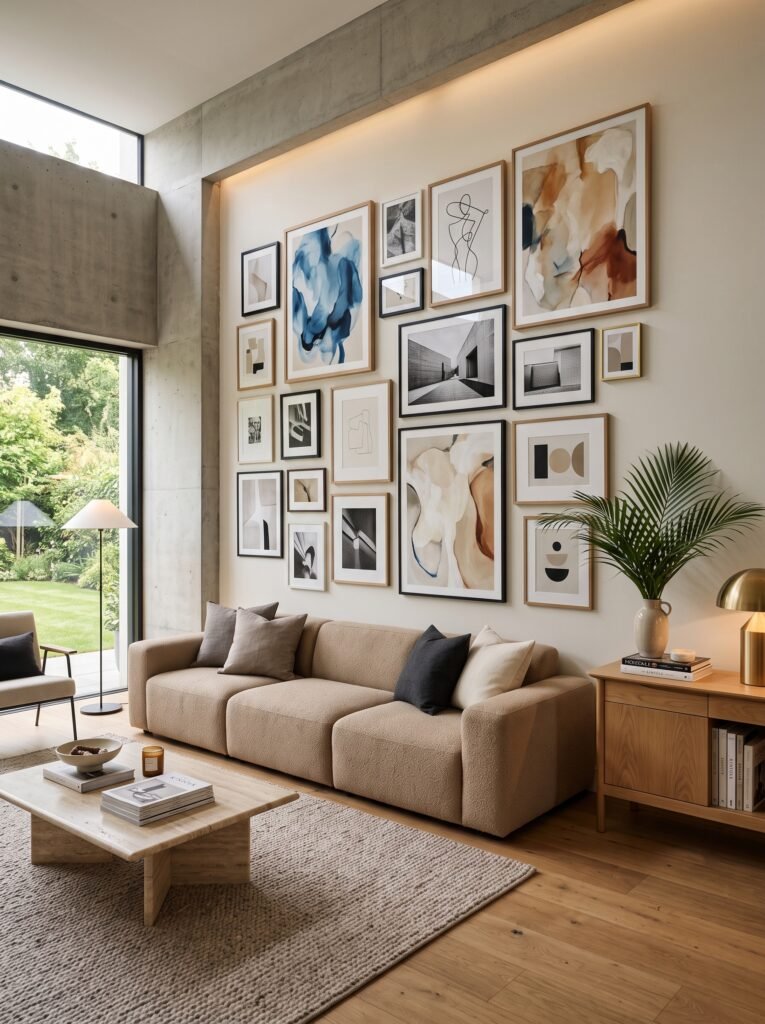
9. Modern Gallery Wall Living Room
Walls provide a major opportunity to personalize a living room.
Thoughtfully arranged artwork can turn an otherwise plain wall into a sophisticated focal point. The goal is not to cover every available surface but to create a cohesive visual composition.
Modern living room wall decor can include photography, abstract artwork, line drawings, sculptural objects, or a combination of different frame styles.
Gallery Wall Tips
- Select a consistent color story.
- Mix different artwork sizes.
- Keep spacing intentional.
- Center the composition over the sofa.
- Leave breathing room around the arrangement.
- Use high-quality frames.
If you prefer a cleaner appearance, one oversized artwork can sometimes have more impact than a large gallery wall.
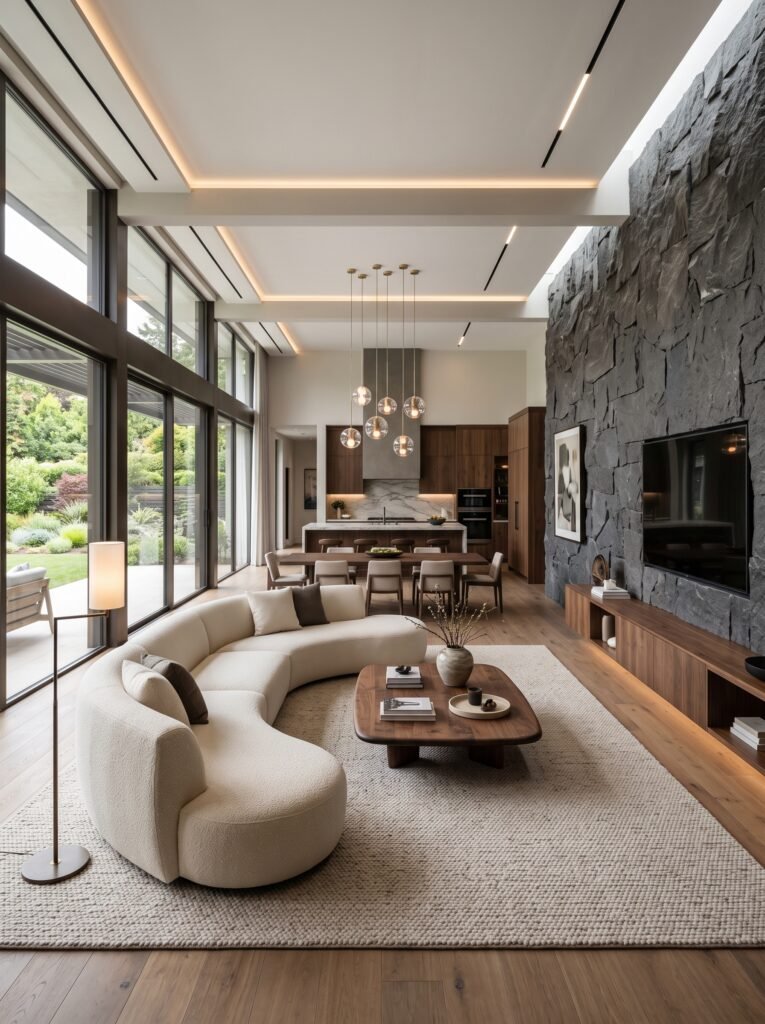
10. Open-Plan Luxury Modern Living Room
Large open-plan spaces require more planning than smaller rooms because several functional areas need to work together visually.
A successful open-plan living room can combine seating, television viewing, dining, and kitchen areas while maintaining a sense of separation.
Furniture placement is one of the most effective tools for defining zones. A large sectional can establish the living area, while an area rug visually anchors the seating arrangement.
A consistent palette across the entire space helps maintain cohesion.
Open-Plan Design Principles
- Use furniture to define zones.
- Keep major materials coordinated.
- Repeat one or two accent colors.
- Use rugs to anchor seating areas.
- Maintain clear walking paths.
- Use lighting to distinguish functions.
- Avoid pushing every piece of furniture against the walls.
The television area should still feel integrated into the overall room rather than appearing as an unrelated feature.
How to Choose the Right Modern Living Room Style
Before buying furniture or selecting paint colors, consider how you actually use the room.
Ask yourself:
- How many people regularly use the room?
- Do you entertain guests frequently?
- Is the television a major focal point?
- Do you need hidden storage?
- Does the room receive natural sunlight?
- Is the room connected to a kitchen or dining area?
- Do you prefer a minimalist or layered appearance?
- How much maintenance are you comfortable with?
Your answers should determine the design rather than following a trend simply because it looks attractive online.
Modern TV Unit Design: What Actually Works?
The television is often one of the largest visual objects in a living room, so its surrounding design deserves careful consideration.
There are many modern tv unit designs, but the best one depends on the room’s size, storage requirements, wall dimensions, and overall aesthetic.
1. Floating TV Cabinet
A floating cabinet creates a lightweight appearance and makes cleaning underneath easier.
2. Full-Height Feature Wall
A full-height wall can combine the television with stone, wood, plaster, or textured panels.
3. Built-In Storage
Built-in cabinetry works well for larger rooms where additional storage is required.
4. Minimal TV Panel
A simple panel behind the television can provide a clean backdrop without overwhelming the room.
5. Asymmetrical Design
An asymmetrical composition can make the television wall more visually interesting while maintaining a contemporary character.
Choosing a Modern TV Cabinet Design
A good tv cabinet design should provide enough storage without becoming the dominant feature of the room.
Consider:
- Cable management
- Device ventilation
- Drawer storage
- Cabinet height
- Wall width
- Material durability
- Cleaning access
- Visual proportion
For smaller rooms, a floating cabinet is often preferable to a large floor-standing unit.
For larger rooms, built-in cabinets can combine media storage, bookshelves, decorative niches, and concealed compartments.
Living Room Wall Designs That Add Character
Good living room wall designs should enhance the architecture rather than simply fill empty space.
Popular Options
Wood panels: Add warmth and vertical texture.
Stone: Creates a luxurious architectural focal point.
Textured plaster: Provides subtle depth.
Painted accent wall: Affordable and easy to update.
Gallery wall: Adds personality.
Built-in shelving: Combines storage and decoration.
Fluted panels: Add rhythm and contemporary texture.
When choosing a feature wall, consider what you want the eye to notice first.
If the television is already visually dominant, an extremely busy wall behind it may create unnecessary competition.
How to Create a Balanced Cozy Living Room
A cozy living room is not necessarily a small room. Comfort comes from how the space feels and functions.
Use:
- Comfortable seating
- Warm lighting
- Soft rugs
- Layered cushions
- Curtains
- Natural materials
- Personal artwork
- Plants
- Appropriate furniture proportions
Avoid overcrowding. A room can have many soft elements and still feel spacious if there is enough circulation space.
Lighting for Modern Living Room Designs
Lighting can completely change the appearance of modern living room designs.
Instead of depending on one central ceiling fixture, use three layers.
Ambient Lighting
Provides general illumination throughout the room.
Task Lighting
Used for reading, working, or specific activities.
Accent Lighting
Highlights artwork, architectural details, shelving, or the TV wall.
Recommended Lighting Sources
- Recessed ceiling lights
- Floor lamps
- Table lamps
- Wall sconces
- LED strips
- Pendant lights
- Architectural niche lighting
Warm or neutral-white lighting is often more comfortable in living spaces than very cool lighting.
Expert Tips
Keep the Color Palette Controlled
Choose one dominant color family and introduce one or two supporting tones.
Invest in the Sofa
The sofa occupies a significant amount of visual and physical space. Prioritize comfort, durability, and appropriate proportions.
Don’t Ignore the Ceiling
A simple ceiling with recessed lighting can work beautifully, while carefully designed architectural details can add another layer of sophistication.
Use Large-Scale Decor Carefully
One large artwork or substantial plant can often make a stronger statement than many small decorative objects.
Hide Everyday Clutter
Modern interiors look better when remote controls, cables, toys, and miscellaneous objects have dedicated storage.
Leave Breathing Room
Empty space is part of good interior design. Not every shelf or wall needs decoration.
Expert Tip: The most successful modern interiors usually have fewer decorative objects than expected, but each selected item has a clear visual or functional purpose.
Common Mistakes to Avoid
1. Making the Room Too Beige
Neutral interiors need contrast. Introduce wood, black accents, darker textiles, greenery, or artwork.
2. Choosing Furniture That Is Too Large
Oversized sofas can quickly overwhelm smaller rooms.
3. Mounting the TV Without Planning
Determine cable routes, viewing height, storage, and wall proportions before installation.
4. Using Too Many Feature Walls
One strong focal point is usually more effective than several competing ones.
5. Ignoring Lighting
Even an expensive interior can look ordinary with poor lighting.
6. Copying a Trend Exactly
Your room should work for your lifestyle rather than looking like a showroom.
7. Blocking Windows
Avoid placing tall furniture where it prevents natural light from entering.
8. Forgetting Circulation
Always leave comfortable walking paths around furniture.
9. Overdecorating Shelves
A few carefully selected objects usually look more sophisticated than tightly packed shelves.
Frequently Asked Questions
What are the best modern living room ideas for a small space?
For a small room, prioritize appropriately scaled furniture, floating storage, wall-mounted TVs, light colors, mirrors, multifunctional furniture, and clear circulation paths. A carefully planned layout can make a small room feel much larger.
How can I make my living room look modern?
Start with a simple color palette, clean-lined furniture, layered lighting, minimal clutter, natural materials, and one or two strong architectural or decorative focal points.
What is the best modern TV wall design?
There is no single best design. Popular options include marble or stone panels, wood slats, textured plaster, floating cabinets, built-in storage, and minimalist wall-mounted installations. Choose based on your room size and storage needs.
Which TV unit design modern approach is best for small living rooms?
A floating TV cabinet with concealed storage is often a practical choice because it provides functionality without making the floor area appear crowded.
How can I create a warm apartment aesthetic?
Use warm neutral colors, natural wood, soft textiles, linen curtains, layered lighting, plants, and a limited number of personal decorative pieces. Avoid excessive cool-white lighting.
What makes a farmhouse living room look modern?
Keep the natural materials and comfortable atmosphere associated with farmhouse style, but simplify the decorative details. Combine timber, neutral upholstery, black accents, contemporary lighting, and clean-lined furniture.
How should I decorate a living room wall?
Choose one approach based on the room’s needs. You can use artwork, shelving, wood panels, stone, textured plaster, mirrors, or a television feature wall. Avoid combining too many competing focal points.
Are modern TV unit designs suitable for luxury interiors?
Yes. A well-designed TV unit can become an architectural feature when combined with quality materials, concealed wiring, integrated lighting, stone or wood panels, and proportionally sized cabinetry.
How do I make a living room feel cozy without making it cluttered?
Use texture rather than excessive objects. Add a comfortable rug, soft curtains, cushions, warm lighting, natural wood, and one or two meaningful decorative elements.
What is the difference between a TV wall design and a TV cabinet design?
A tv wall design generally refers to the complete wall treatment surrounding the television, including panels, lighting, shelving, stone, or architectural elements. A tv cabinet design focuses primarily on the storage unit below or around the television.
Conclusion
The best modern living room is not necessarily the one with the most expensive furniture or the most dramatic decorations. It is the room where architecture, furniture, lighting, storage, colors, and textures work together naturally.
The top 10 Modren Living Room ideas explored in this guide demonstrate how different design approaches can create completely different atmospheres. Warm neutral interiors provide timeless comfort, marble TV walls add luxury, textured rooms create coziness, and modern farmhouse designs bring natural character.
For apartments and compact homes, thoughtful small living room decor can maximize space without sacrificing style. Meanwhile, carefully designed living room wall designs, gallery walls, wood slats, and sophisticated TV features can transform otherwise ordinary surfaces into architectural focal points.
When planning your own living room, start with the way you live rather than the trend you want to copy. Consider furniture proportions, storage needs, natural light, circulation, and how prominently the television should feature in the room.
Then build the design gradually.
Choose a foundation color, select the main furniture, establish the lighting, add architectural features such as a tv wall design, and finish with carefully chosen textures and decor.
The result should be a living room that looks modern today while remaining comfortable and functional for years to come.