
The Nobel Prize 2026 medicine winners were revealed on Monday, October 5 — and the honor went to three scientists who handed the world something close to a light switch for the human brain. Karl Deisseroth, Peter Hegemann and Georg Nagel won the 2026 Nobel Prize in Physiology or Medicine for their discoveries concerning light-gated ion channels and optogenetics, a technique that lets researchers turn individual nerve cells on or off using nothing but flashes of light.
The announcement, made by the Nobel Assembly at the Karolinska Institute in Stockholm, opened this year’s Nobel week with a celebration of one of the most powerful tools modern neuroscience has ever gained. The three laureates will share prize money of 12 million Swedish kronor — roughly $1.2 million.
Who won the 2026 Nobel Prize in Medicine?
This year’s laureates span two countries and two generations of research. Karl Deisseroth, 54, is an American neuroscientist at Stanford University in California. Peter Hegemann, 71, is a German researcher at Humboldt University in Berlin, and Georg Nagel, 73, is based at the University of Würzburg in Germany.
Announcing the prize, the Nobel Assembly said optogenetics “makes it possible to switch on, or off, the activity of individual nerve cells in a living brain.” Thomas Perlmann, secretary of the Nobel Committee, added that the method “is now being used in laboratories around the world to reveal the brain’s mysteries.”
Deisseroth learned of the honor in the middle of the night at his Northern California home. A self-described night owl, he had been working late on papers and emails to his students and had just gone to lie down when the call from Stockholm came through. “No real sleep was achieved,” he told the Associated Press in a phone interview an hour after the announcement — adding that his next task was packing school lunches for his children, who were still sound asleep.
What is optogenetics — the “light switch” for the brain?
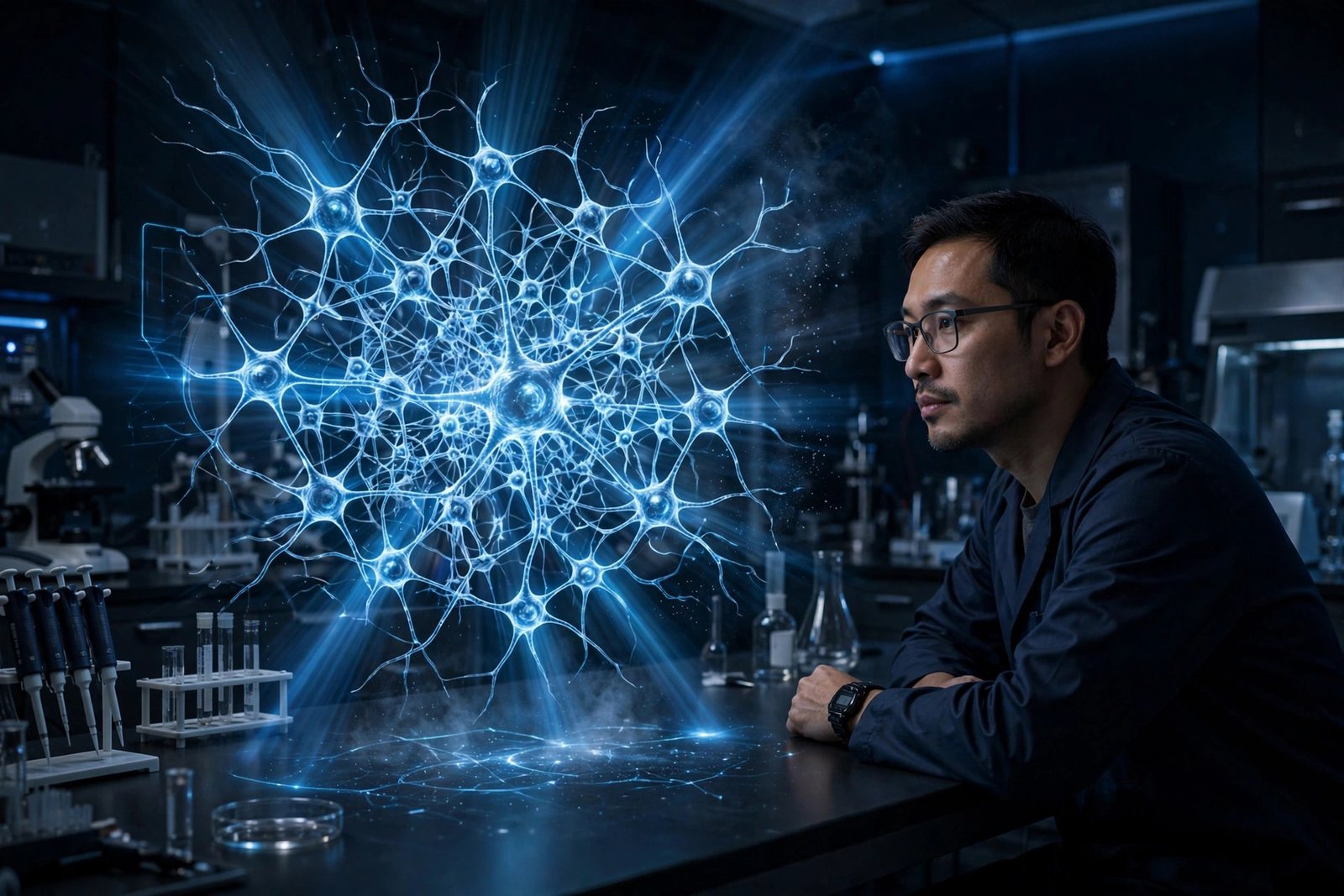
Optogenetics is a technique that combines genetics and optics to control the activity of specific brain cells with light. The trick relies on light-sensitive proteins called light-gated ion channels. When scientists insert the genes for these proteins into nerve cells, those cells become responsive to particular wavelengths of light: a flash opens the channels, charged particles flow across the cell membrane, and the neuron fires — or falls silent.
Before optogenetics, studying the brain meant using blunt instruments. Electrodes could stimulate thousands of neurons at once but could never pick out a single cell or a single type of cell. Optogenetics changed that completely. For the first time, researchers could activate or silence precisely defined groups of neurons in a living, behaving animal — and watch what happened next.
That precision is what makes the technique revolutionary. By switching circuits on and off, scientists can move beyond correlation and test cause and effect: which neurons drive a memory, which ones shape an emotion, and which pathways go wrong in disease.
How a pond alga led to a Nobel Prize
The story behind the discovery begins in the early 1990s with a humble single-celled green alga called Chlamydomonas. Peter Hegemann was studying how this microscopic organism swims toward light — a reaction that happens within half a millisecond. He proposed a bold hypothesis: a single protein could both capture light and act as an ion channel.
Georg Nagel put that idea to the test. By injecting genes from the alga into frog eggs, he discovered channelrhodopsin-2 — an ion channel that swings open when struck by light. The biological light switch was real.
Karl Deisseroth then saw what the finding could mean for neuroscience. Working with collaborators, he introduced the genes encoding these light-sensitive proteins into mammalian nerve cells, proving that light could be used to control brain activity with extraordinary precision. What began as curiosity about pond algae had become one of the defining tools of 21st-century brain science.
From lab tool to real patients: why this Nobel matters now
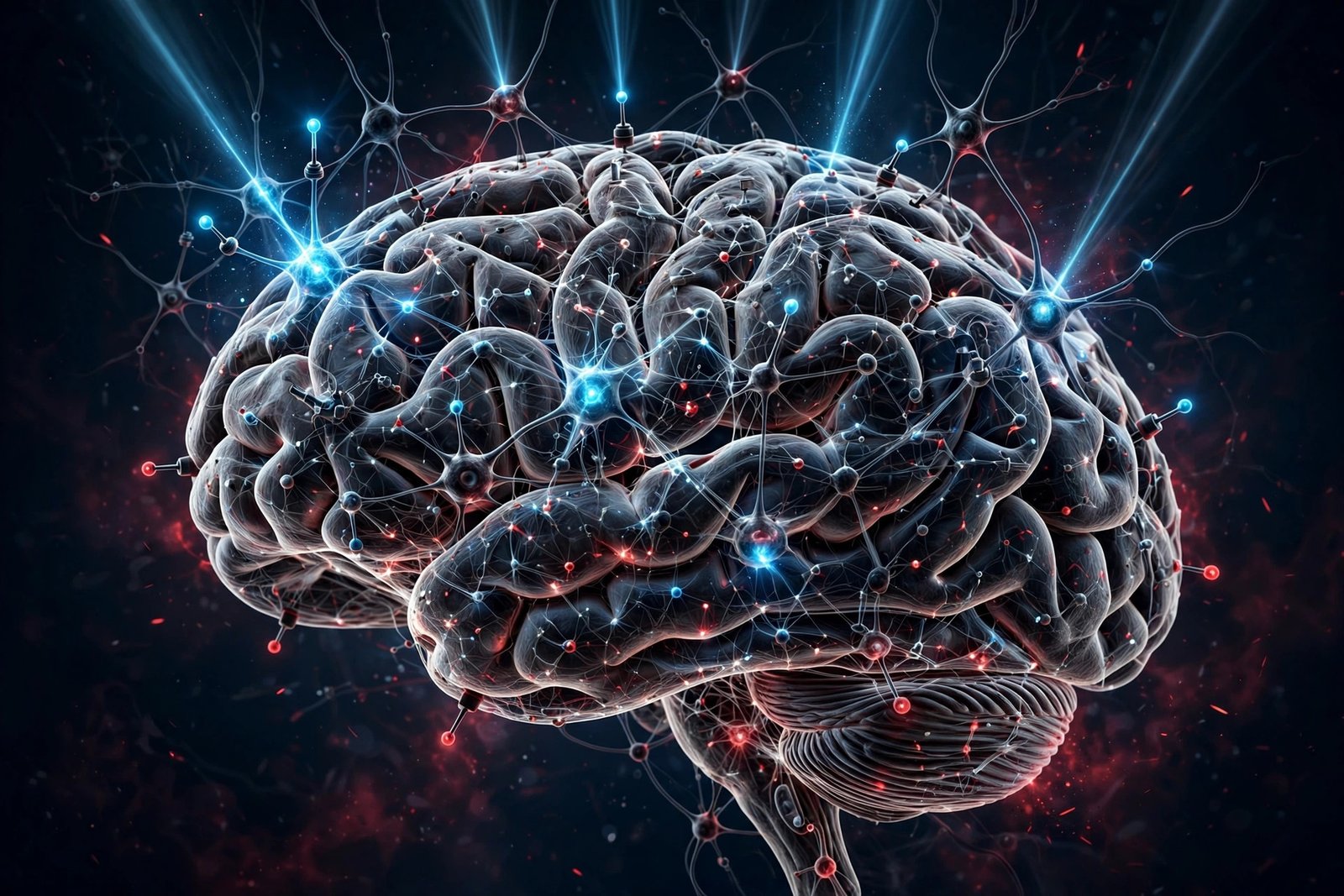
Optogenetics is no longer just a laboratory curiosity — it is moving toward the clinic. In ongoing clinical trials, researchers are working to restore vision in people blinded by retinitis pigmentosa by introducing a light-sensitive protein into the retina, effectively giving damaged eyes a new way to sense light. Scientists also hope the technique could lead to far more precise cochlear implants, stimulating the auditory nerve with light instead of electricity.
In basic research, the method has opened a new era in understanding the circuits behind memory, emotion and behavior — the same circuits that malfunction in conditions like Parkinson’s disease and depression. As researchers map the neural pathways behind mood and behavior, that work could one day transform the science of everyday mental wellness and how we treat mood disorders.

A landmark year for science — and what’s next in Nobel week
The medicine prize traditionally opens the annual Nobel announcements, and the rest of this week’s honors will follow quickly: physics on Tuesday, chemistry on Wednesday, literature on Thursday, the peace prize on Friday, and the economics prize on October 12. Last year’s medicine prize went to American scientists Mary Brunkow and Fred Ramsdell and Japan’s Shimon Sakaguchi for work on how the immune system spares healthy cells.
The 2026 award also caps a remarkable year in which science and technology have repeatedly made global headlines — from breakthrough AI model launches reshaping research to fierce debates over AI safety. Against that backdrop, a prize honoring painstaking, decades-long curiosity-driven research is a reminder that some of the biggest breakthroughs start with the smallest questions — in this case, how a tiny alga finds the light.
The bottom line
With optogenetics, three scientists gave humanity a way to speak the brain’s own language — light. The 2026 Nobel Prize in Medicine honors not just a clever technique, but a new era of neuroscience in which the mysteries of memory, emotion and disease are finally being switched on, one neuron at a time. Watch for Tuesday’s physics announcement as Nobel week continues.