
Chrome Decor: Creating a Sophisticated Modern Interior With Chrome and Wood
Chrome has a distinctive ability to make an interior feel polished, contemporary, and visually refined. Its reflective surface interacts with natural and artificial light, giving furniture and decorative elements a dynamic appearance throughout the day.
However, creating a beautiful chrome interior is not simply about adding as many metallic pieces as possible. The most successful spaces use chrome selectively and balance its cool reflective quality with warmer materials, comfortable textures, and carefully chosen colors.
One of the most effective combinations is chrome and wood. The contrast between polished metal and natural wood creates a sophisticated look that feels modern without becoming excessively cold or industrial.
A carefully selected chrome side table, sculptural chrome lamp, elegant chrome chair, or statement chrome table can introduce this aesthetic without requiring a complete renovation.
Whether you are refreshing a living room, designing a contemporary home, or simply looking for new chrome home decor, understanding how to balance materials and proportions can make all the difference.
Table of Contents
- Why Chrome Decor Works in Contemporary Homes
- The Appeal of Chrome and Wood
- Creating a Balanced Chrome Living Room
- Styling a Chrome Side Table
- Making a Chrome Lamp a Design Feature
- Using a Chrome Wall Effectively
- Choosing a Chrome Chair
- Introducing a Chrome Table
- Building a Cohesive Chrome Home
- Colors That Complement Chrome
- Materials That Balance Chrome
- Mistakes to Avoid in Chrome Interior Design
- Frequently Asked Questions
- Final Thoughts
Why Chrome Decor Works in Contemporary Homes
The appeal of chrome decor comes largely from its reflective quality.
Unlike matte materials, polished chrome responds to its surroundings. It can reflect nearby furniture, windows, lighting, and wall colors, which means the finish can appear slightly different depending on the environment.
This makes chrome particularly useful in contemporary spaces where clean lines and carefully controlled materials are important.
Chrome can also introduce contrast. A reflective chrome surface against a dark wall creates a dramatic effect, while chrome positioned next to natural wood produces a warmer and more balanced appearance.
The finish works especially well with modern furniture because its smooth surface complements simple silhouettes and architectural shapes.
Design Tip: Chrome usually looks more sophisticated when it is used as a deliberate accent rather than covering every major surface in a room.
The Appeal of Chrome and Wood
The relationship between chrome and wood is one of the strongest combinations for a modern interior.
Chrome brings coolness, reflection, and precision. Wood introduces warmth, texture, and natural variation.
Together, they prevent each other from becoming visually overwhelming.
A walnut console with chrome hardware can feel contemporary without losing its natural character. A wooden tabletop supported by polished chrome legs can create a modern dining area without relying entirely on metallic materials.
Dark walnut is particularly effective when paired with polished chrome because the deep brown tones provide a rich background for reflective surfaces.
Lighter oak can create a softer, more relaxed appearance, while medium-toned wood can bridge the gap between contemporary and transitional styles.
The important factor is balance. Let the wood provide warmth while chrome provides the modern accent.
Creating a Balanced Chrome Living Room
A chrome living room should feel comfortable first and visually sophisticated second.
Start with the largest elements in the room, such as the sofa, flooring, wall treatment, and primary furniture. Once those elements are established, chrome can be introduced through smaller pieces.
A charcoal sofa, walnut coffee table, polished chrome side table, and sculptural chrome lamp can create a strong foundation.
Textured rugs and soft upholstery prevent the metallic surfaces from making the space feel too hard.
Dark green, navy, charcoal, and burgundy can also provide dramatic backgrounds for chrome.
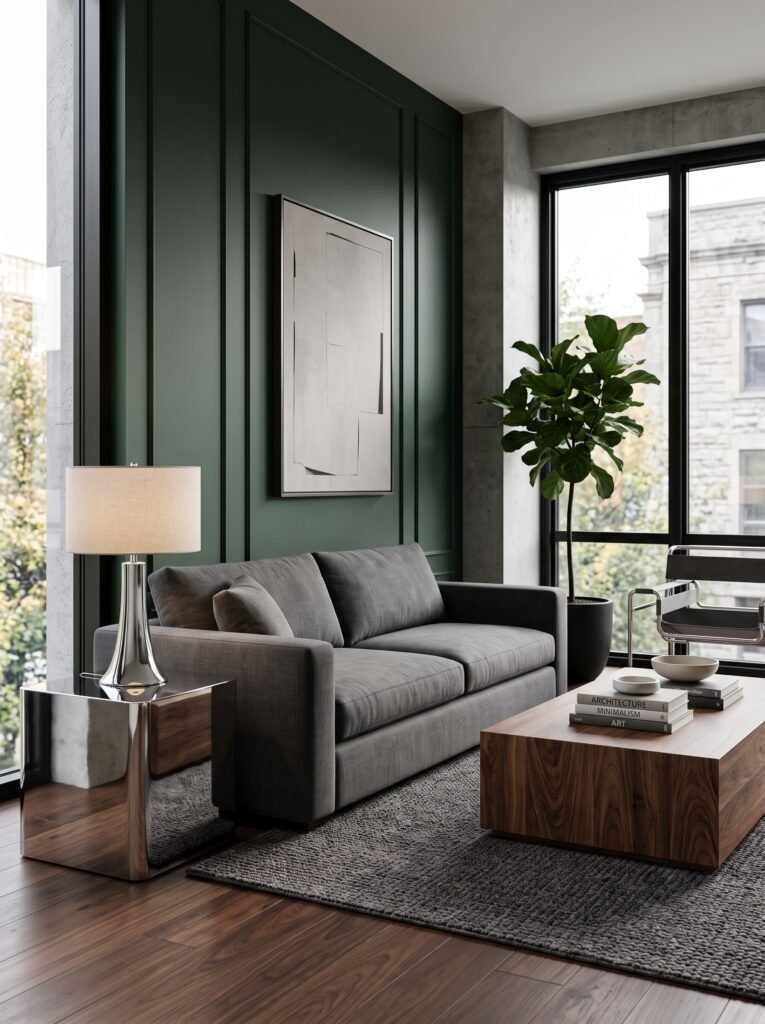
Styling a Chrome Side Table
A chrome side table can be one of the simplest additions to a modern room.
Its size should relate to the furniture around it. A very small table beside a large sectional may look lost, while an oversized design can make a compact seating area feel crowded.
The shape also matters.
Round chrome tables can soften rooms dominated by straight lines. Square and rectangular designs tend to reinforce a more architectural aesthetic.
Material combinations can make the table even more interesting.
Chrome paired with glass creates a lightweight contemporary appearance. Chrome paired with wood feels warmer, while chrome combined with dark stone can create a more luxurious atmosphere.
Keep the tabletop relatively uncluttered. The reflective surface itself is already a visual feature.
Making a Chrome Lamp a Design Feature
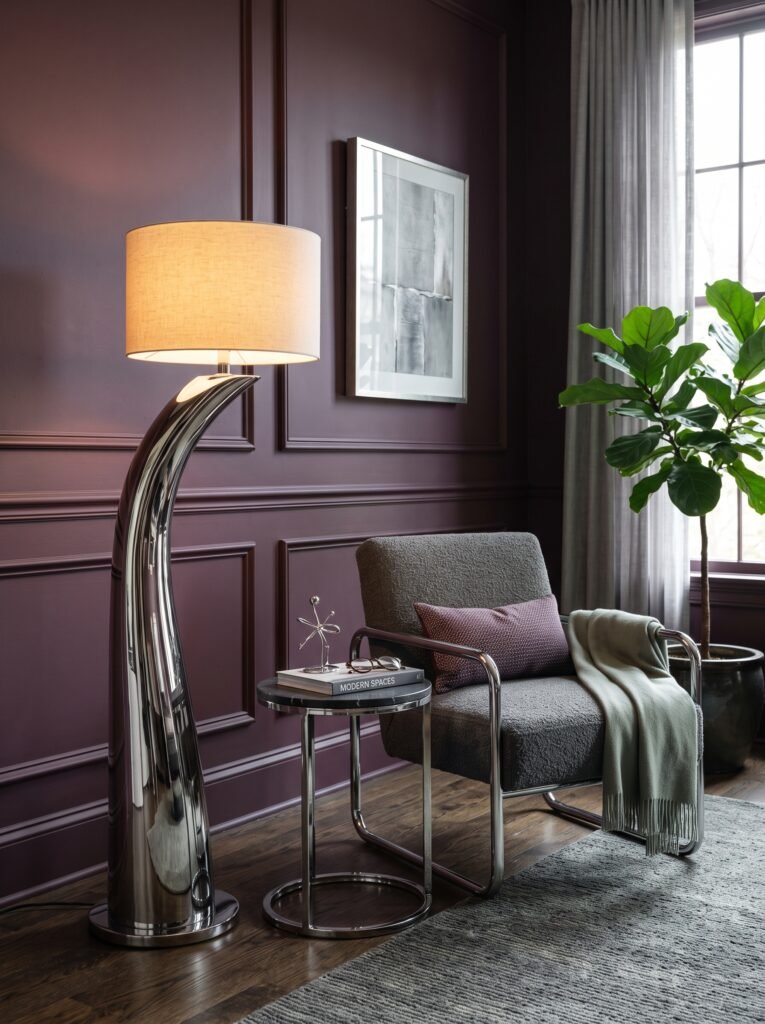
A chrome lamp can serve as both lighting and sculpture.
Instead of selecting a basic metallic lamp simply because it matches the room, consider the silhouette.
Curved forms can soften an angular interior. Cylindrical designs can reinforce a minimalist aesthetic, while unusual sculptural shapes can become a focal point.
Lighting also changes how chrome appears.
Natural daylight produces crisp reflections, while warm evening lighting creates softer and more atmospheric reflections.
Place the lamp somewhere where its shape can be appreciated, such as beside a sofa, reading chair, console, or side table.
Using a Chrome Wall Effectively
A chrome wall can create a dramatic focal point, but an entire reflective wall is not always necessary.
A more refined approach is to introduce chrome through architectural details.
Consider a large chrome-framed mirror, geometric metallic panels, reflective wall art, or narrow chrome architectural strips.
These details can create the impression of a metallic feature without making the entire room feel excessively reflective.
The surrounding wall should also have enough visual breathing room.
A strong chrome feature usually looks better when it has space around it rather than competing with dozens of other decorative objects.
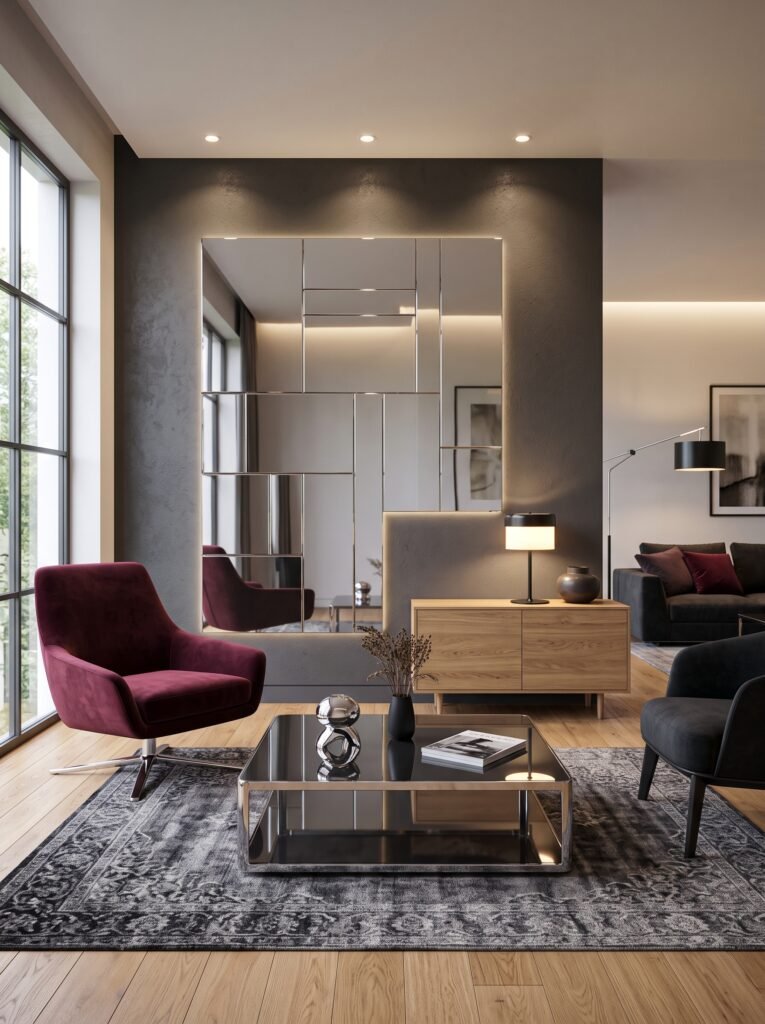
Choosing a Chrome Chair
A chrome chair can become an excellent statement piece when its frame and upholstery provide contrast.
Polished chrome works particularly well with charcoal, deep green, navy, burgundy, and brown upholstery.
If the chair has a highly sculptural frame, keep the furniture surrounding it relatively simple.
This allows the chair to become a visual focal point without making the room feel crowded.
Chrome chairs can also work beyond the living room. They can be introduced into a home office, bedroom corner, dressing area, or reading space.
Introducing a Chrome Table
A chrome table can become a strong focal point in a contemporary interior.
In a living room, a polished chrome coffee table can add a reflective center to the seating arrangement.
In a dining area, a chrome base combined with a wooden tabletop can create a particularly attractive chrome and wood combination.
For smaller spaces, a slim chrome console can provide the same metallic character without occupying too much physical or visual space.
The surrounding materials should determine the amount of chrome you introduce.
If the room already contains mirrors, glass, and multiple reflective surfaces, a smaller metallic table may provide enough visual impact.
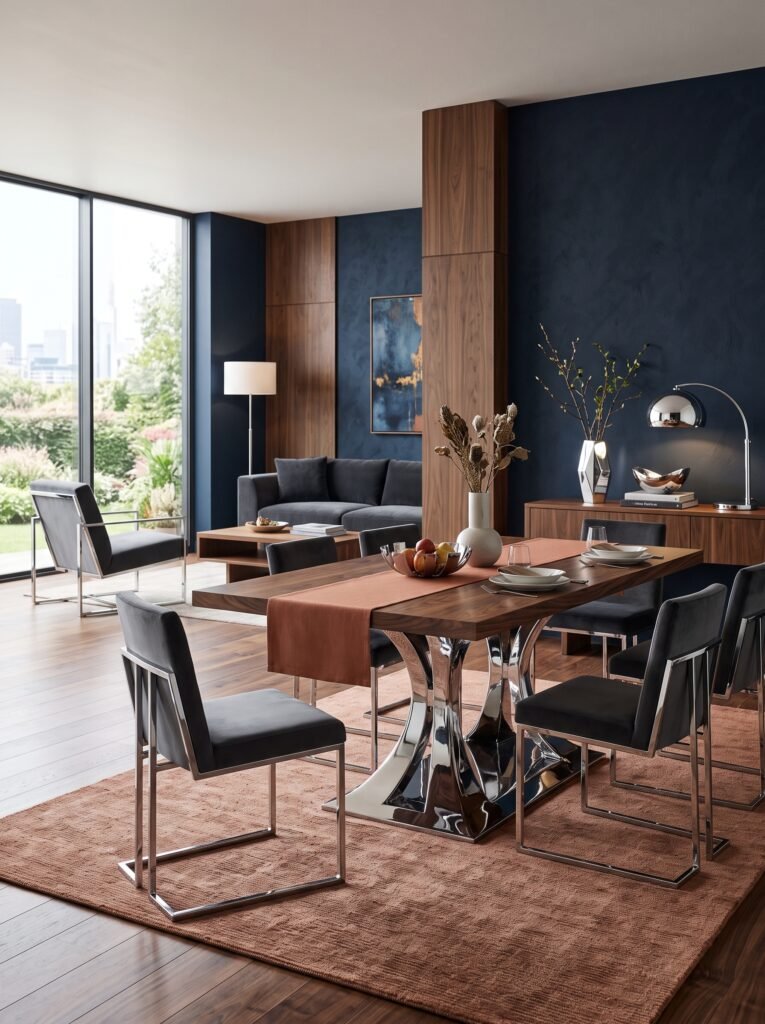
Building a Cohesive Chrome Home
A sophisticated chrome home does not need chrome furniture in every room.
Instead, repeat the finish through smaller details.
A living room might use a chrome side table. A bedroom could feature a chrome lamp. A dining room might have a chrome table base, while an entryway could use a chrome-framed mirror.
This repetition creates continuity without making every room look identical.
The same principle works with hardware.
Cabinet handles, furniture legs, lighting fixtures, and decorative objects can subtly repeat the chrome finish.
The result is a home where the material feels intentionally connected across different spaces.
Colors That Complement Chrome
The surrounding color palette can completely change the character of a chrome interior design scheme.
Deep Green
Deep forest green gives chrome a sophisticated and dramatic background.
Navy
Navy creates a refined contrast that feels contemporary without being overly flashy.
Charcoal
Charcoal provides a strong modern foundation and works particularly well with polished silver.
Burgundy
Burgundy introduces warmth and richness, making reflective chrome feel less cold.
Walnut Brown
Walnut is one of the strongest natural partners for chrome because its warm undertones contrast beautifully with silver metal.
Soft Neutrals
Muted neutral shades can create a calmer backdrop when chrome is already providing enough visual activity.
A good general formula is to select one dominant color, one supporting neutral, a natural material, and chrome as the metallic accent.
Materials That Balance Chrome
Chrome becomes much more comfortable when paired with tactile materials.
Soft upholstery can reduce the visual hardness of metallic furniture.
Wool rugs introduce texture underfoot.
Linen curtains soften architectural lines.
Natural wood adds warmth.
Stone introduces another organic surface without competing directly with the reflective qualities of chrome.
Plants can also provide a natural contrast to highly polished surfaces.
The goal is to create a conversation between different textures rather than allowing chrome to dominate everything.
Mistakes to Avoid in Chrome Interior Design
Using Too Much Chrome
More metallic furniture does not automatically create a more luxurious interior.
Too many reflective surfaces can make a room visually busy and cold.
Ignoring Natural Materials
Wood, stone, textiles, and plants provide important visual balance.
Choosing Poor Lighting
Chrome reflects its surroundings, so harsh or badly positioned lighting can create distracting reflections.
Mixing Too Many Metallic Finishes
Chrome can work with other metals, but using chrome, gold, brass, copper, and multiple finishes together can quickly make a room feel inconsistent.
Ignoring Scale
Always consider the size of the furniture in relation to the room.
A beautiful chrome table can still look inappropriate if its proportions are wrong.
Overdecorating Reflective Surfaces
Chrome already catches attention. Additional decorative objects should be selected carefully.
How to Make Chrome Feel Warm
The biggest concern with metallic interiors is often that they may feel cold.
Fortunately, this can be solved through layering.
Start with warm wood.
Then add soft upholstery and textured rugs.
Introduce warm ambient lighting.
Use a deeper accent color such as forest green, burgundy, or navy.
Finally, add chrome as the polished finishing layer.
This approach allows chrome to provide the contemporary character while the other materials make the room comfortable.
Frequently Asked Questions
Is chrome decor good for a modern home?
Yes. Chrome works particularly well with contemporary furniture, clean architectural lines, glass, wood, stone, and minimalist styling.
Does chrome and wood really work together?
Yes. Chrome provides a cool reflective contrast while wood introduces natural warmth and texture. Together they create a balanced contemporary appearance.
How can I use a chrome side table without making the room too shiny?
Keep the rest of the room relatively matte. Combine the table with textured upholstery, wood, rugs, and soft fabrics so the chrome becomes a controlled accent.
What should I put next to a chrome lamp?
A chrome lamp works well beside a sofa, accent chair, console, or side table. Surrounding it with darker colors or warm wood can make the reflective finish more noticeable.
Can a chrome wall work in a small room?
Yes, but use chrome selectively. A smaller reflective panel, chrome-framed mirror, or limited metallic detail can create interest without overwhelming the space.
What colors look best with chrome?
Deep green, navy, charcoal, burgundy, walnut brown, and carefully selected neutral tones all complement chrome.
How do I make a chrome living room feel comfortable?
Combine chrome with wood, soft upholstery, textured rugs, warm lighting, natural fabrics, and plants. These elements soften the reflective qualities of metal.
Does every chrome piece need to match?
No. Keeping the general finish consistent helps create cohesion, but different furniture shapes and complementary materials can make the interior more interesting.
Final Thoughts
A beautiful chrome interior is about balance rather than quantity.
Chrome can introduce reflection, modernity, and visual sophistication, but it becomes much more appealing when combined with warm materials and comfortable textures.
The combination of chrome and wood is particularly effective because the two materials naturally balance each other. A polished chrome side table can feel warmer beside walnut furniture, while a sculptural chrome lamp can become a striking focal point without dominating the room.
Similarly, a carefully selected chrome chair, chrome table, or subtle chrome wall feature can introduce a contemporary character without requiring an entire room makeover.
The most successful chrome home decor schemes allow every material to contribute something different. Wood provides warmth, textiles add comfort, dark colors create depth, and chrome introduces reflection and polish.
When these elements are thoughtfully combined, chrome home styling can feel sophisticated, welcoming, and distinctly modern rather than cold or overly metallic.