
Top 10 Backyard Play Areas for Fun, Safe, and Creative Outdoor Spaces
Introduction
A backyard can be much more than a patch of grass, a patio, or a place to keep garden furniture. With thoughtful planning, it can become an exciting space where children can play, explore, exercise, create, and spend more time outdoors.
The best backyard play areas don’t necessarily require expensive equipment or a huge garden. A small corner can become a climbing zone, a simple wooden structure can turn into a DIY playground, and a few carefully selected materials can create a memorable outdoor adventure space.
The key is to design the play area around your children’s ages, interests, available space, and safety needs.
In this guide, we’ll explore the Top 10 Backyard Play Areas that combine creativity, functionality, and family-friendly design. You’ll find ideas ranging from a classic playground backyard setup to imaginative sensory gardens, outdoor art spaces, climbing areas, and compact solutions for smaller homes.
Whether you’re planning a complete backyard transformation or simply want to add one new activity zone, these ideas can help you create a space children will genuinely enjoy using.
Quick Tip: Start with one activity your children already love. Then build the backyard around that interest rather than filling the entire space with equipment.
Table of Contents
- Classic Wooden Backyard Playground
- DIY Adventure Climbing Zone
- Backyard Sand and Sensory Play Area
- Outdoor Mud Kitchen
- Backyard Mini Sports Court
- Nature-Inspired Exploration Garden
- Outdoor Art and Creativity Station
- Backyard Reading and Imagination Nook
- Water Play Area
- Multi-Activity Backyard Play Zone
- Expert Tips for Designing a Backyard Play Area
- Common Mistakes to Avoid
- Frequently Asked Questions
- Conclusion
1. Classic Wooden Backyard Playground
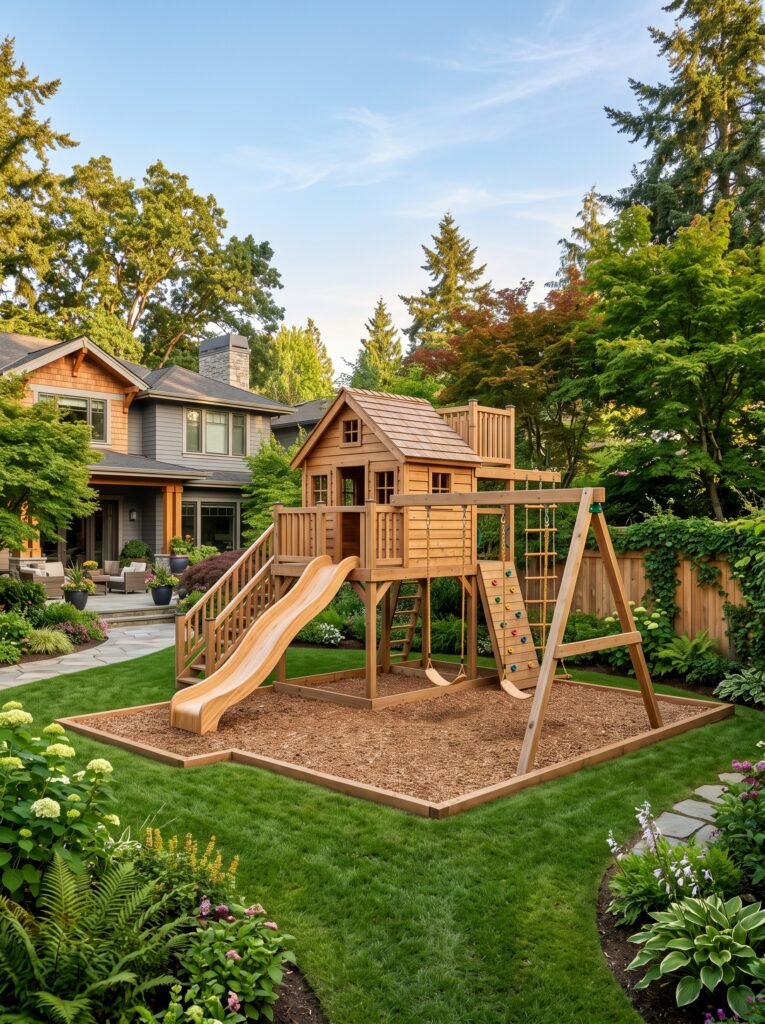
A classic wooden play structure is one of the most versatile ways to create an outdoor kids play area. A well-designed structure can combine swings, slides, climbing features, platforms, and imaginative play spaces in one compact installation.
Wooden playgrounds also blend naturally with gardens and landscaping. Instead of looking like commercial playground equipment, a thoughtfully designed structure can feel like part of the backyard itself.
For smaller gardens, consider a compact structure with one slide, a small climbing wall, and a single swing. Larger yards can accommodate a more substantial playhouse with multiple activity areas.
Features to Consider
- Slide
- Swings
- Climbing wall
- Wooden ladder
- Small playhouse
- Rope elements
- Raised platform
Safety Considerations
Choose equipment appropriate for your children’s ages and abilities. Install it on a suitable impact-absorbing surface and regularly inspect fasteners, wood, ropes, and moving components.
2. DIY Adventure Climbing Zone
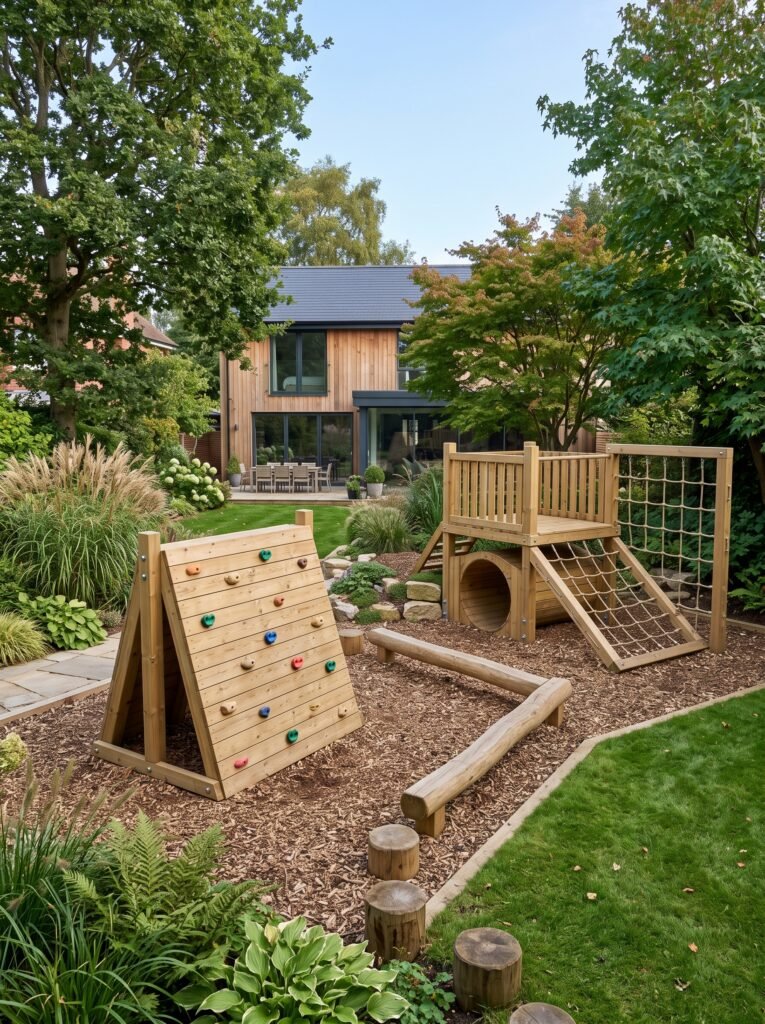
If your children enjoy climbing, balancing, and physical challenges, a diy kids playground can be designed around adventure-style activities.
Instead of purchasing a complete playground system, create a customized climbing zone using appropriately designed outdoor structures. A low climbing wall, balance beam, rope net, stepping logs, and a small platform can create an exciting obstacle course.
This approach also makes it easier to adapt the design as children grow.
A diy playground should always be built using suitable materials, secure connections, age-appropriate dimensions, and proper fall protection. Structural components that carry children’s weight should be designed and installed with safety as the priority.
Adventure Features
- Low climbing wall
- Balance beam
- Stepping logs
- Rope net
- Wooden tunnel
- Small climbing platform
Safety Tip: DIY does not mean improvised. Never use unstable branches, unsecured ropes, sharp hardware, or materials that haven’t been designed for children’s use.
3. Backyard Sand and Sensory Play Area
A dedicated sensory zone can encourage quieter, open-ended play while giving children an opportunity to explore different textures and materials.
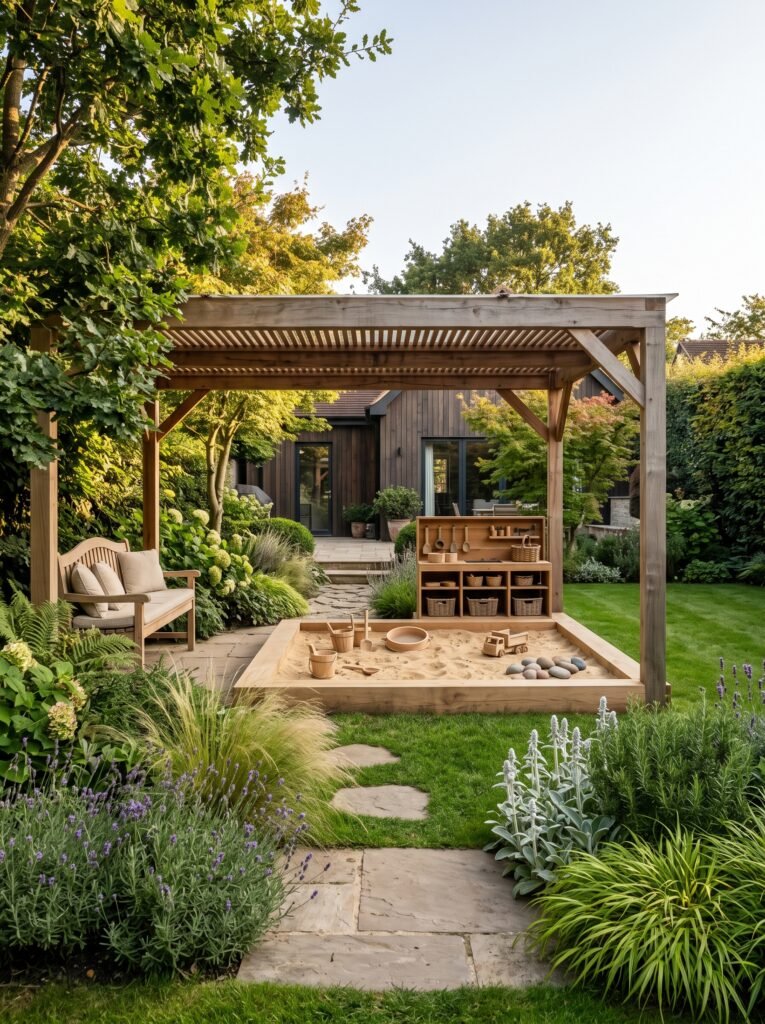
A sandbox surrounded by natural stepping stones, smooth timber edging, sensory plants, and a small shaded seating area can become an attractive part of the garden.
This is particularly useful for kids backyard ideas because it doesn’t require a large amount of equipment. Children can use sand for building castles, creating pretend landscapes, digging, or imaginative games.
Add storage nearby for buckets, shovels, molds, and other outdoor toys.
Useful Additions
- Covered sandbox
- Wooden seating
- Buckets and tools
- Natural stepping stones
- Sensory plants
- Toy storage
4. Outdoor Mud Kitchen
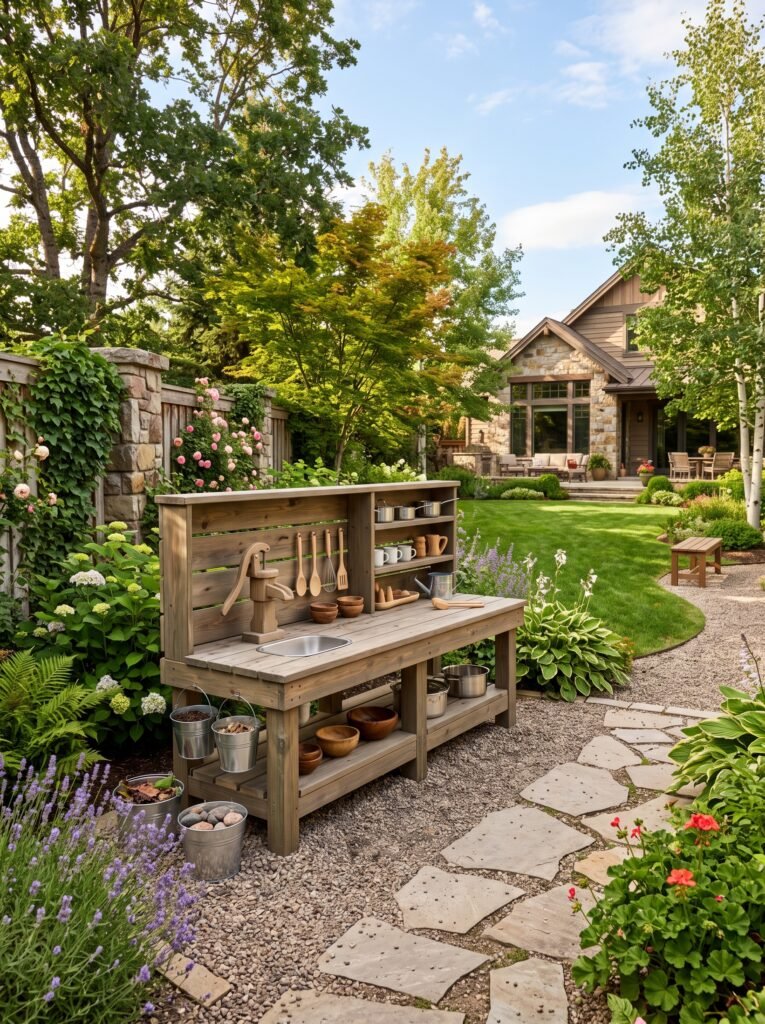
A mud kitchen is an excellent choice for children who enjoy imaginative and hands-on play. It provides a dedicated place for mixing soil, water, leaves, flowers, and other natural materials.
Rather than placing messy activities directly beside the house, create a defined play area outside using a small wooden counter, old-style outdoor sink, shelves, buckets, and washable containers.
The area doesn’t need to look messy. A simple timber workstation with organized storage can actually become an attractive feature within the garden.
What to Include
- Wooden workbench
- Outdoor play sink
- Buckets
- Shelves
- Safe cooking utensils
- Water container
- Natural loose materials
The mud kitchen can also encourage creative storytelling and pretend cooking while helping children interact with natural materials.
5. Backyard Mini Sports Court
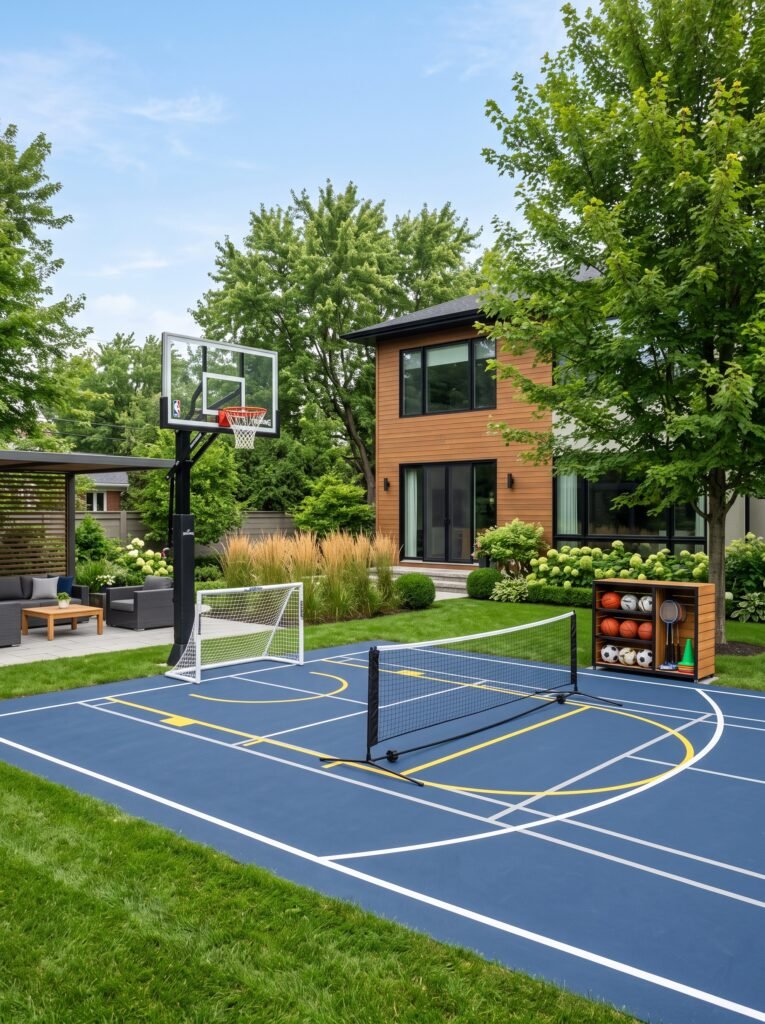
If your children enjoy running, throwing, kicking, and competitive games, consider dedicating part of the garden to a compact sports area.
A small multipurpose court can support basketball, football practice, badminton, ball games, or simple obstacle activities. You don’t necessarily need a regulation-sized court. A modest paved or synthetic surface can provide enough room for active play.
This is one of the most practical outdoor play areas for families with older children who may outgrow traditional playground equipment.
Possible Features
- Basketball hoop
- Small football goal
- Adjustable net
- Ball storage
- Marked activity zones
- Outdoor seating
Keep sports equipment away from windows, delicate landscaping, and high-traffic pathways.
6. Nature-Inspired Exploration Garden
Not every play space needs a slide or climbing frame. A carefully designed garden can become an adventure environment in its own right.
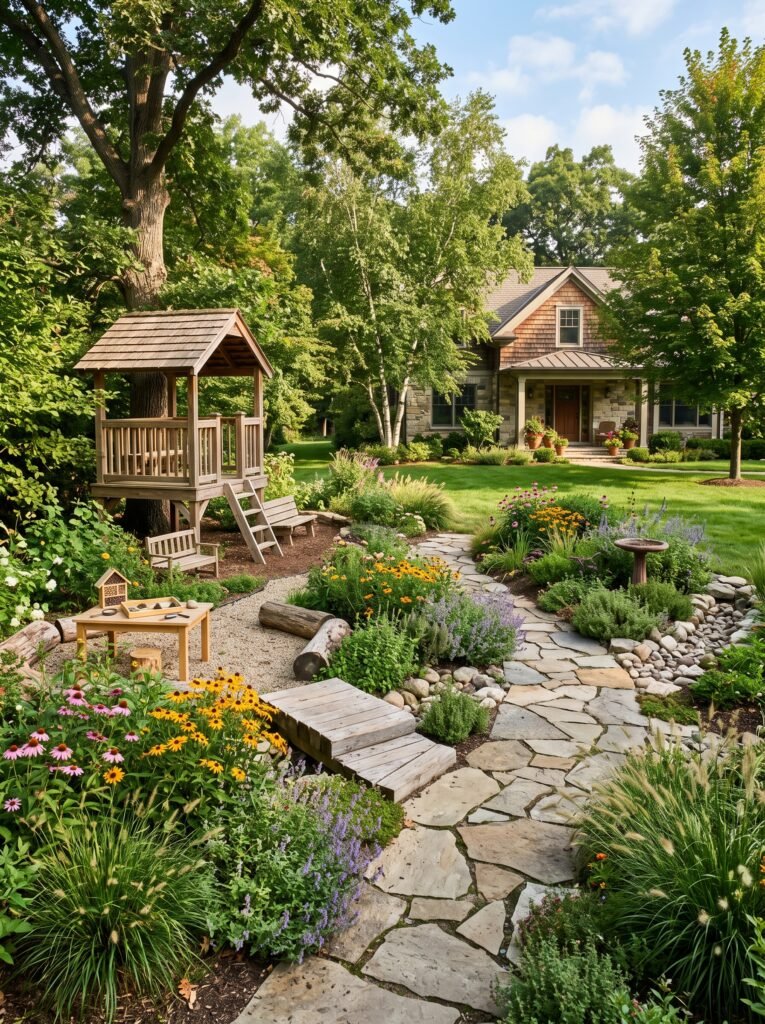
Create a winding path through child-friendly planting, stepping stones, logs, small viewing areas, and hidden garden corners. Children can search for insects, observe plants, collect natural objects, or create imaginative stories around the landscape.
This type of backyard ideas for kids is especially useful for families who want a play area that looks like a natural part of their garden.
Design Elements
- Winding pathways
- Stepping stones
- Native plants
- Small logs
- Butterfly-friendly planting
- Hidden garden corners
- Observation areas
Avoid plants with thorns, poisonous berries, or other known hazards in areas children regularly explore.
7. Outdoor Art and Creativity Station
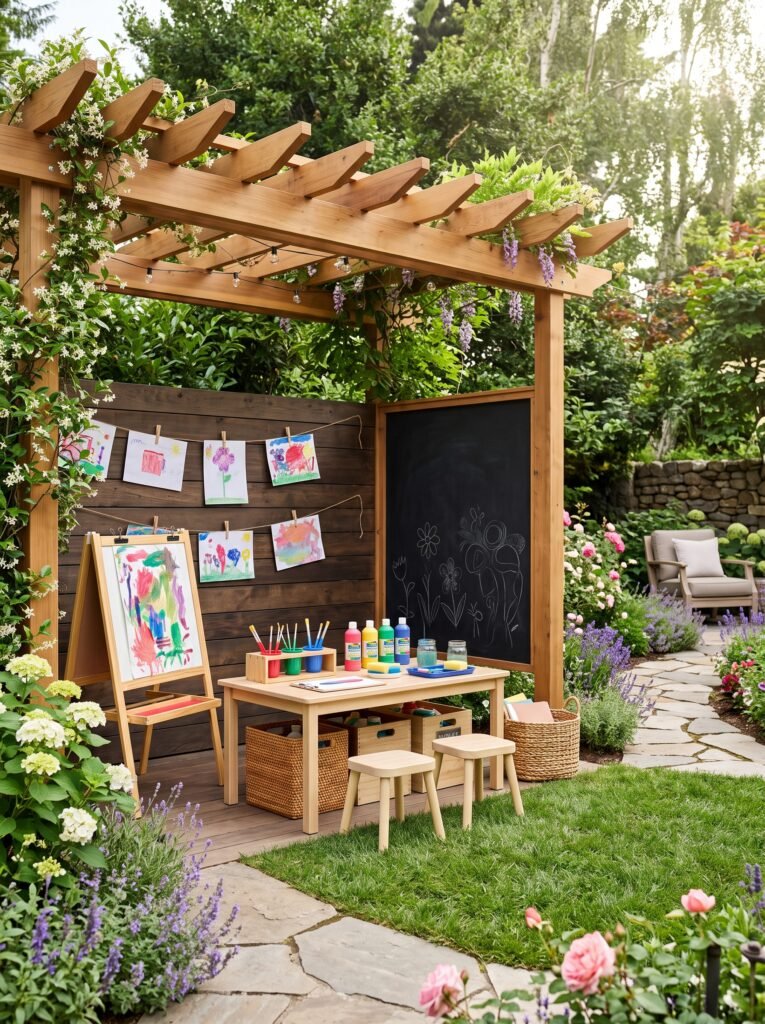
Turn a quiet corner of your garden into an outdoor creative studio. A weather-resistant art wall, small table, washable surfaces, chalkboard, and organized storage can give children a dedicated place to draw, paint, build, and experiment.
This type of kids outdoor play doesn’t require expensive playground equipment and can be adapted for different ages.
A covered pergola or canopy is particularly useful because it protects the activity area from intense sun and light rain.
Creative Features
- Outdoor chalkboard
- Art table
- Washable work surface
- Storage bins
- Easel
- Covered roof
- Display wall
Use washable, child-appropriate art supplies and keep permanent paints away from surfaces that are difficult to clean.
8. Backyard Reading and Imagination Nook
A play area doesn’t always have to involve energetic activities. A quiet reading nook gives children a comfortable place to relax, look through books, tell stories, or enjoy imaginative play.
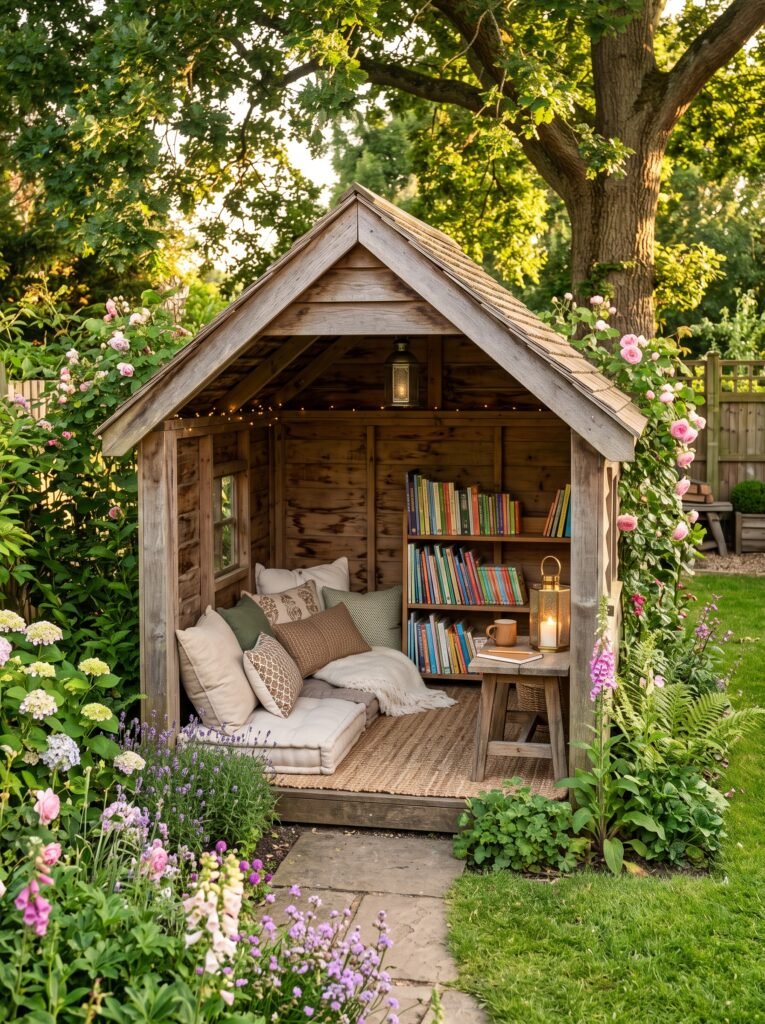
Create a small sheltered corner using a wooden pergola, compact playhouse, outdoor cushions, weather-resistant rug, and low bookshelf. Add soft lighting if the space is designed for evening use.
This can work particularly well when planning an outdoor kids play area that includes both active and quiet zones.
Include
- Small playhouse
- Outdoor cushions
- Weather-resistant rug
- Low bookshelf
- Soft lighting
- Shade structure
The nook can also become a pretend shop, clubhouse, campsite, or storytelling corner.
9. Water Play Area
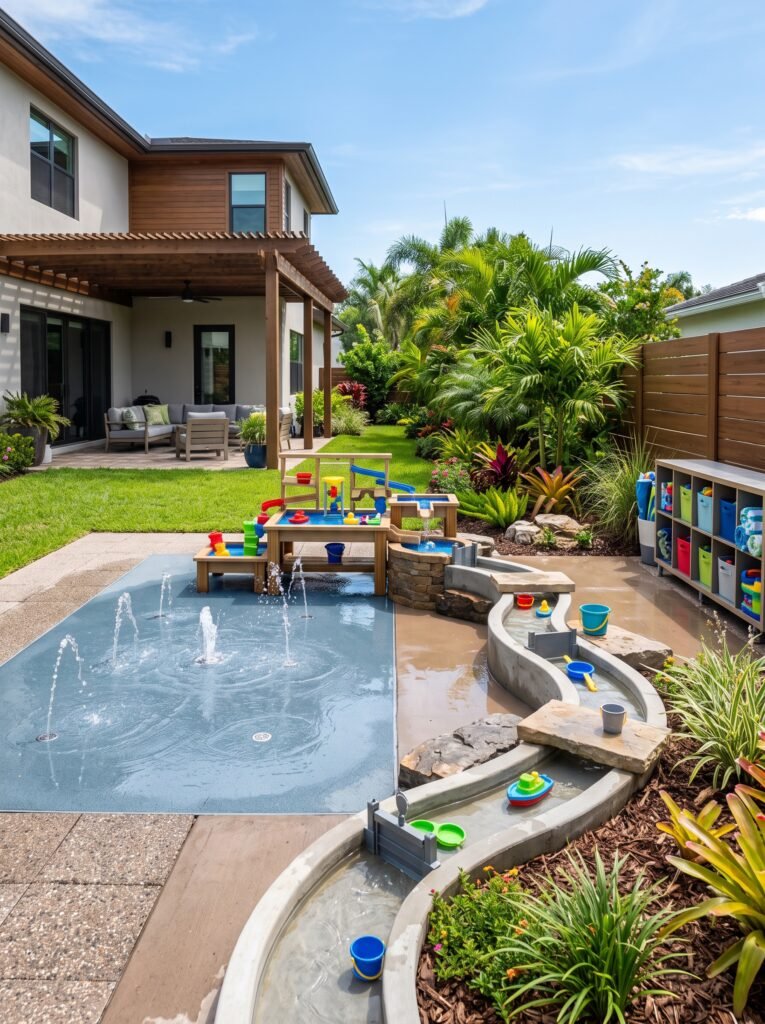
A dedicated water zone can provide refreshing outdoor entertainment during warm weather. It doesn’t need to be a permanent swimming pool. A controlled splash area, water table, outdoor shower, or shallow play feature can provide plenty of opportunities for supervised water play.
Choose a location with a suitable drainage solution and keep electrical equipment safely away from water.
A shaded surface is particularly useful during hot weather, while nearby storage makes it easier to keep towels and water toys organized.
Ideas for a Water Zone
- Children’s water table
- Splash pad
- Outdoor shower
- Shallow water play feature
- Water channels
- Toy storage
Safety Tip: Children should be supervised around water at all times. Keep water-play equipment age-appropriate and remove standing water when the activity is finished.
10. Multi-Activity Backyard Play Zone
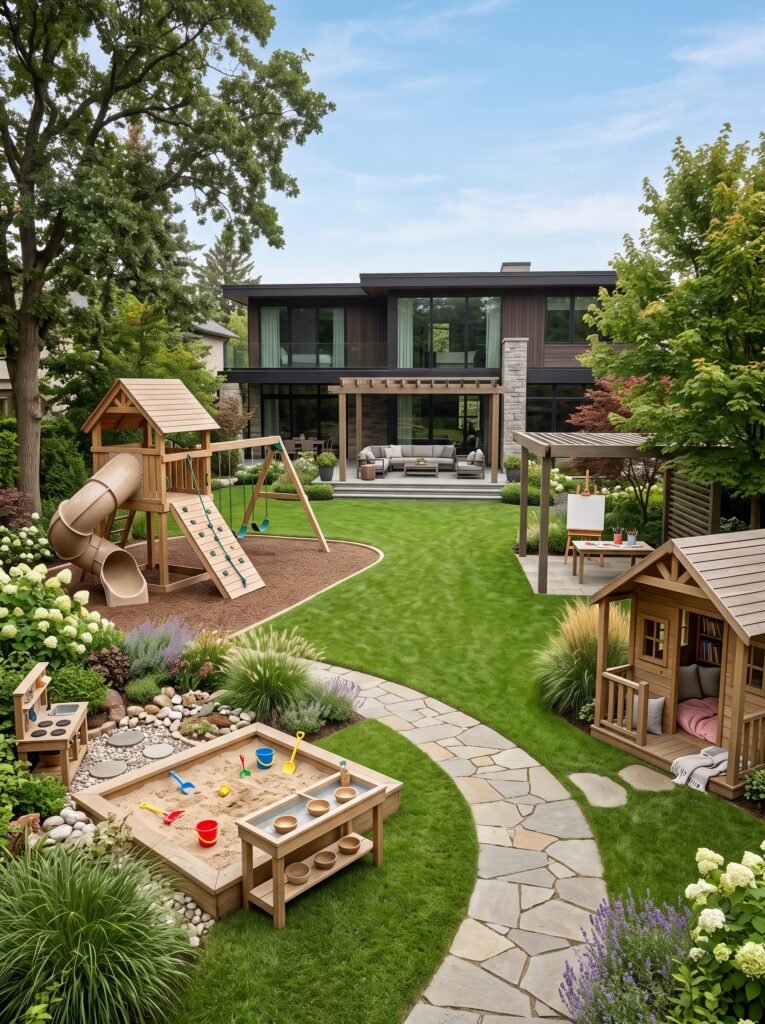
If you have enough space, combine several activities into one thoughtfully planned playground backyard. Instead of placing everything in one crowded area, divide the garden into distinct zones.
For example, one section can contain a climbing structure, another can have a sandbox, while a third provides open lawn for sports and running. A small creative station or reading nook can occupy a quieter corner.
This approach gives children different ways to play while allowing the backyard to remain visually organized.
Example Layout
| Zone | Activity |
|---|---|
| Zone 1 | Climbing and sliding |
| Zone 2 | Sand and sensory play |
| Zone 3 | Open lawn games |
| Zone 4 | Art and creativity |
| Zone 5 | Quiet reading nook |
This is also an excellent approach when combining different backyard ideas for kids without making the entire garden look like a commercial playground.
Expert Tips for Creating a Better Backyard Play Area
1. Design for Your Children’s Ages
A toddler, elementary-age child, and teenager will have very different interests and physical abilities. Choose equipment and activities accordingly.
2. Keep Active and Quiet Zones Separate
Put climbing equipment and ball games farther from reading corners and seating areas. This makes the backyard more comfortable for everyone.
3. Provide Shade
Trees, pergolas, canopies, and shade sails can make outdoor spaces more comfortable during sunny weather.
4. Think About Drainage
Water play, rain, and regular garden watering can create muddy or slippery areas. Plan drainage before installing permanent play features.
5. Choose Durable Materials
Outdoor play equipment should be able to withstand weather, repeated use, and regular cleaning.
6. Keep Storage Nearby
Outdoor toys become much easier to manage when buckets, balls, art supplies, and garden toys have dedicated storage.
7. Leave Open Space
Don’t fill every part of the garden with equipment. An open lawn gives children room for running, games, and activities that change over time.
Expert Tip: The most successful play spaces are flexible. A simple open lawn can often provide more long-term value than equipment that only supports one activity.
Common Mistakes to Avoid
1. Installing Too Much Equipment
A backyard doesn’t need every type of playground feature. Too much equipment can reduce usable space and create visual clutter.
2. Ignoring Fall Protection
Climbing structures, swings, and elevated platforms require suitable protective surfaces and safe installation.
3. Forgetting Shade
A beautiful play area may go unused if it becomes uncomfortably hot during sunny weather.
4. Choosing Plants Without Checking Safety
Research plants before adding them to spaces children can access.
5. Poor Toy Storage
Without storage, outdoor play areas can quickly become messy and difficult to maintain.
6. Making the Space Age-Specific
Children grow quickly. Whenever possible, create adaptable zones that can evolve as their interests change.
7. Neglecting Maintenance
Inspect play structures, clean surfaces, check hardware, trim surrounding vegetation, and repair damaged components regularly.
Frequently Asked Questions
What is the best backyard play area for young children?
A combination of a small sandbox, sensory garden, low climbing equipment, and open lawn can work well for younger children. The exact equipment should always match their age and abilities.
How can I create a DIY kids playground?
Start with a simple concept such as a low climbing structure, playhouse, sandbox, or balance area. Use appropriate outdoor materials and ensure every structural element is securely installed and suitable for children’s use.
What is the difference between an indoor playground and an outdoor play area?
An indoor playground is designed inside a building and is protected from outdoor weather, while an outdoor play area uses garden or backyard space for activities such as climbing, running, water play, and nature exploration.
How much space do I need for a backyard playground?
There isn’t one universal size. The available space should determine the type and scale of equipment you install. Always leave sufficient clearance around playground structures and maintain safe pathways.
What are good backyard ideas for kids without a playground?
Consider a mud kitchen, sensory garden, outdoor art station, reading nook, water table, sports area, nature trail, or open lawn for imaginative games.
How can I make a small play area outside?
Use vertical or compact features such as a wall-mounted chalkboard, small sandbox, compact climbing structure, folding play table, or narrow sensory garden. Keeping the center of the space open can make a small area feel larger.
What surfaces are suitable for outdoor play areas?
The appropriate surface depends on the equipment and activity. Grass, engineered play surfaces, rubberized materials, sand, and other impact-absorbing options can be used in different applications. Follow the safety recommendations for the specific equipment you install.
How can I make a backyard play area look attractive?
Choose materials that complement your home’s architecture, use coordinated landscaping, hide storage where practical, and divide the space into organized activity zones instead of placing equipment randomly.
What are good outdoor kids play activities without expensive equipment?
Children can enjoy obstacle courses, nature exploration, outdoor art, sand play, water activities, imaginative playhouses, ball games, and simple balance activities without requiring a large commercial playground.
Conclusion
Creating a memorable backyard doesn’t require an enormous budget or a huge garden. The best Top 10 Backyard Play Areas are thoughtfully designed around how children actually play.
A wooden playground can provide traditional active fun, while a sensory garden encourages exploration. A mud kitchen supports imaginative play, a sports zone promotes movement, and an outdoor art station gives children a place to create. Even a small reading nook can become a favorite retreat.
When planning your space, focus on safety, flexibility, shade, appropriate equipment, durable materials, and easy maintenance. Most importantly, leave enough room for children to invent their own games.
A successful backyard play area isn’t simply a collection of playground equipment. It’s a space where children can move, imagine, discover, create, and enjoy being outdoors—and that’s what makes a backyard truly valuable for the whole family.